
Russian President Vladimir Putin prefers to travel in his country by armored train rather than airplane according to a source close to the dictator’s inner circle.
Mikhail Khodorkovsky’s investigative journalism project The Dossier Center tracks criminal activity within the Kremlin and recently found out that Putin has been traveling by armored train since mid-August 2021.
Putin has always believed he is at risk and under threat, like many other authoritarian presidents. However, in Putin’s case, the measures he takes to protect himself from possible threats are quite extreme.
Among Putin’s security measures, some border on being surreal. Others simply involve hundreds of people watching every move that Russia’s undisputed leader makes. Let’s look at some of Putin’s craziest security measures.
As specified by the BBC, Putin uses the Russian Presidential Security Service as his personal surveillance network.
The Presidential Security Service is integrated into the Russian Federal Protective Service (FSO), which derives from the former KGB, and is also responsible for the protection of other high-ranking Kremlin officials.
Putin also has the Rosgvardia, or Russian National Guard, considered (in a way) as the personal army of the president, which Putin himself created in 2016.
The director of Rosgvardia is General Viktor Zolotov, Putin’s former bodyguard, and there are about 400,000 troops under his direct control.
This large number of soldiers is not only dedicated to the protection of the president but also to arms control, combating terrorism, organized crime, protecting public order and protecting important state facilities.

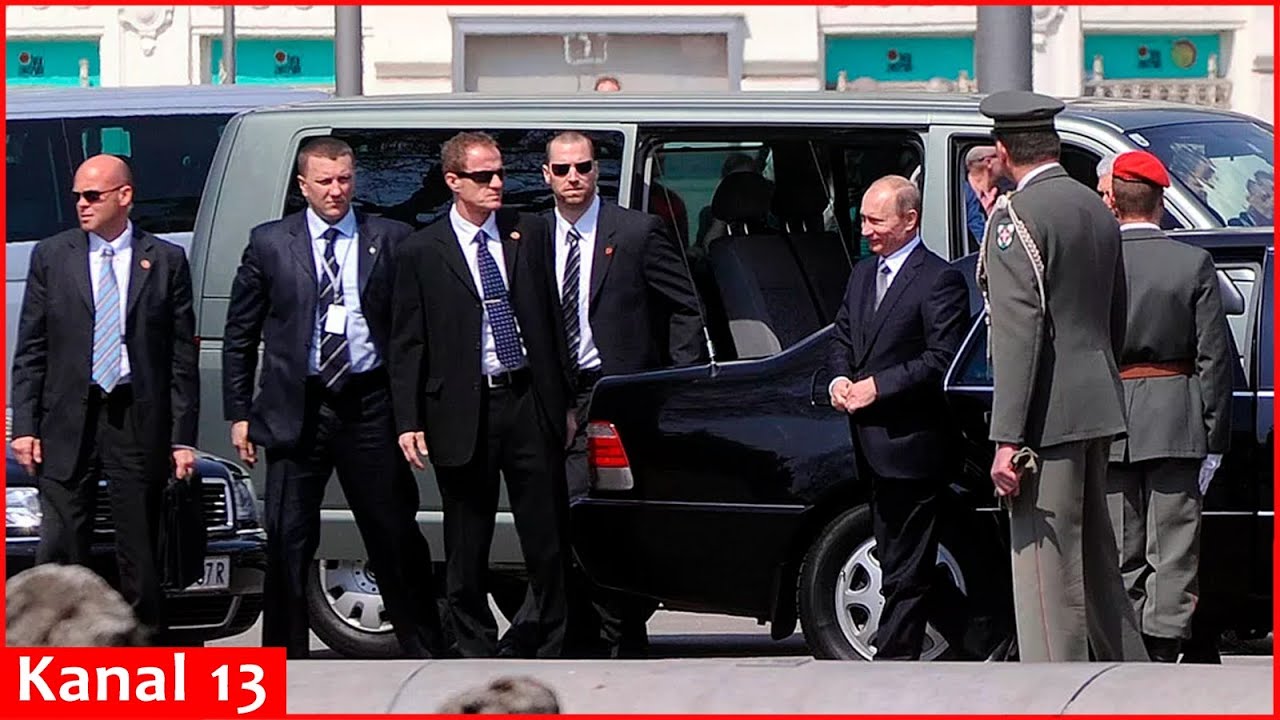
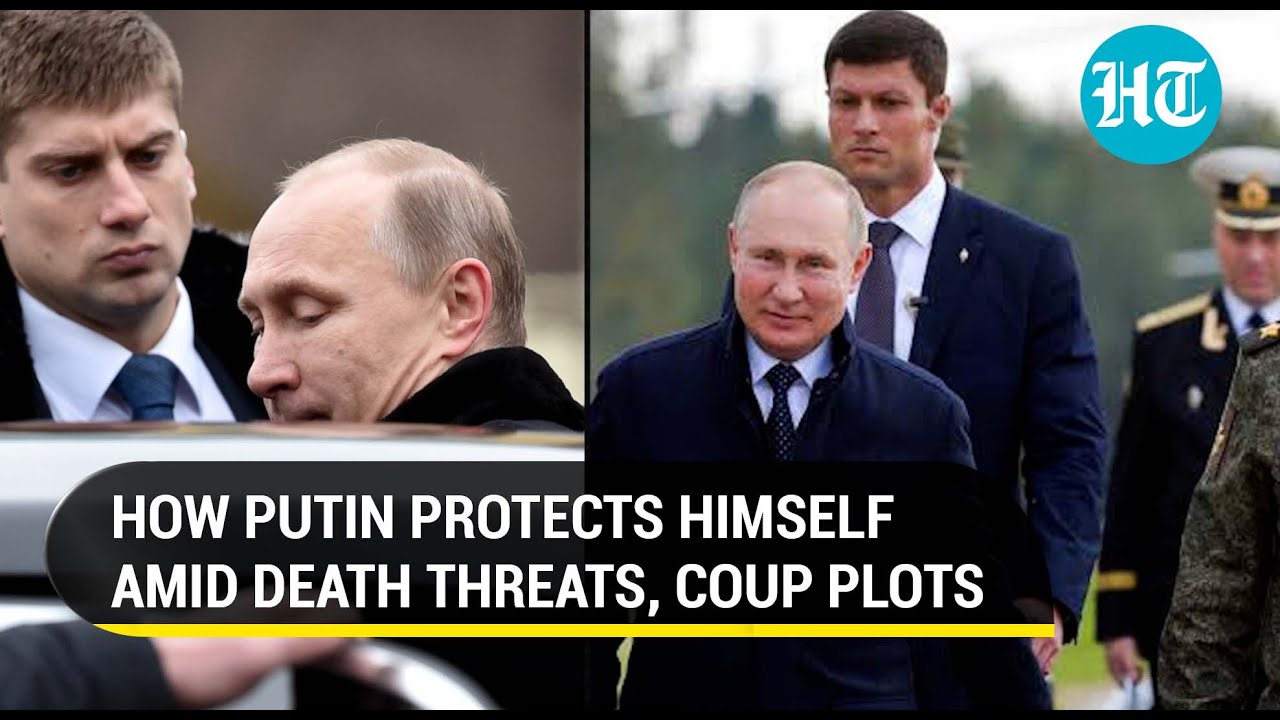

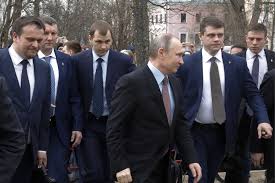
When it comes to protecting Putin, the security service is organized into four circles, according to the website Russia Beyond. The first is made up of hundreds of bodyguards. They are the closest to the Russian president and they are with him 24 hours a day, 7 days a week.
The second is made up of plainclothes agents who mix with the public and the citizens present wherever they go.
A third circle is responsible for surrounding the public present and preventing any suspicious person from exceeding the security zone.
The fourth and final circle comprises snipers that surround the immediate area close to Vladimir Putin on the roofs of neighboring buildings.
By land rather than by air
©Provided by The Daily Digest
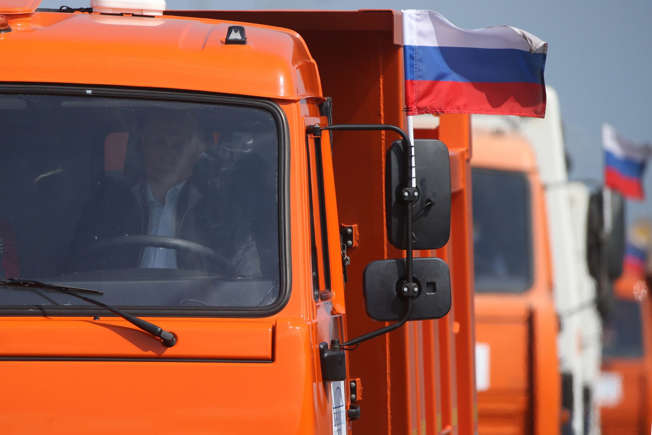
As security expert Mark Galeotti pointed out to the BBC, an additional security complication is that Vladimir Putin does not like to fly and insists on taking a massive caravan of motorcycles, black armored cars, and trucks with him when he travels.For these trips, says Mark Galeotti, the airspace is blocked, traffic is stopped, and extreme caution is exercised.
The matter takes on medieval overtones when we talk about the food that the Russian president eats.
According to Mark Galeotti, Putin has a personal food taster who tests everything the Russian leader is going to eat, to prevent it from being poisoned.
In addition, before serving any food to the Russian president, his bodyguards must first verify that there are no suspicious elements in the preparation, according to what Stephan Hall, an expert on Russia, told the BBC.
Preventive measures do not stop there, because when he makes a trip, the Russian president brings his own food and drink. Even if there is a toast, Vladimir Putin pours himself a drink from his own bottle.
Communications are limited in the close environment of Vladimir Putin and smartphones are prohibited in the Kremlin.
In an interview with the Russian news agency TASS, Vladimir Putin admitted this: only an official, internal line can be used to contact someone inside the Kremlin.
According to The Guardian, Putin distrusts the internet because he considers it “a CIA project”.
In fact, Vladimir Putin has called on Russians on several occasions to not use Google for their searches, considering that it is a tool of the United States to monitor the interests of the Russian population. Reason here (perhaps) is not lacking but monitoring is, rather, used for the commercial interests of the company that owns Google.
Instead of the network of networks, Vladimir Putin uses the traditional method: paper. “He starts his day with three security briefings. One is what’s going on in the world, one is what’s going on in Russia, and the third is what’s going on inside the elite. For him, this is the most important information and the one that will define his day,” Mark Galeotti points out in his statements to the BBC.
Personally, the situation of the Russian president is one of almost monastic isolation. If the pandemic had limited access to the president to a few people, the attack on Ukraine has made even more difficult to meet with Putin.
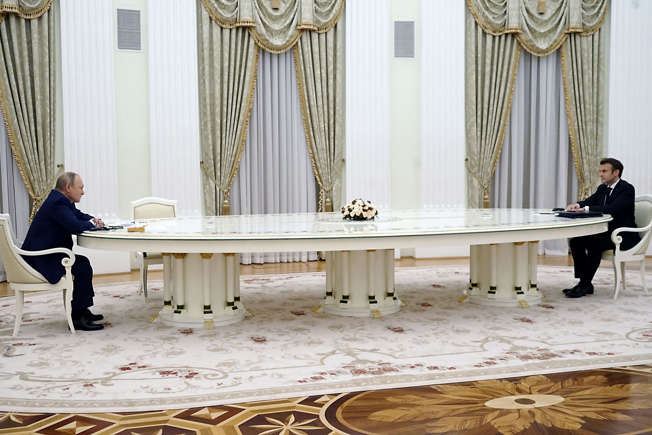
Indeed, Vladimir Putin’s health is treated as a matter of national security. Anyone who wants to see him must undergo quarantine, a medical exam and several PCRs. Tell that to Emmanuele Macron, President of France, who refused to follow these guidelines and angered the Russian leader.
The famous photo of Macron at a table of unusual length was due to the Frenchman’s refusal to take tests before speaking with Putin. However, the use of very long tables to maintain an exaggerated safety distance became common since the pandemic broke out.
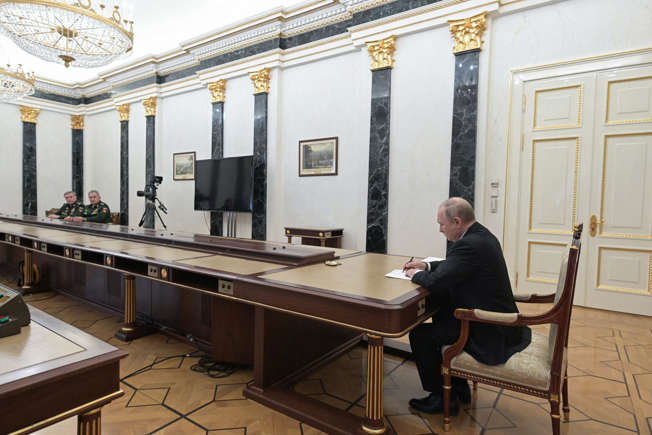
Even in a meeting with such close associates as Defense Minister Sergei Shoigu, Putin kept his distance. Some media have suggested that Covid 19 isolated Putin and placed him on the verge of paranoia.
The Putin who currently shields his existence against external threats seems very different from the one who, in other times, portrayed himself as a seasoned adventurer, riding, hunting or fishing in Siberia. Things certainly have changed.
An officer with the Kremlin’s bodyguard agency who defected last year over his opposition to the Ukraine invasion provided intimate details about Russian President Vladimir Putin to a London-based investigative group, describing him as “paranoid” and calling him a “war criminal.”
The defector, Gleb Karakulov, was a captain in the Federal Protection Service (FSO) at the time of his defection in October. He told the Dossier Center group that he was able to defect on October 14 after a business trip to Kazakhstan on which his wife and daughter accompanied him. On the last day of the trip, the trio flew to Istanbul with no intention of ever returning to Russia.
The Dossier Center, which is funded by Russian opposition figure and Putin critic Mikhail Khodorkovsky, shared more than 10 hours of recordings and transcripts of several interviews it had conducted with Karakulov since his defection with media outlets and for the first time published details on April 4 revealing his comments.
“Our president has become a war criminal,” he said. “It’s time to end this war and stop being silent.”
Karakulov worked as an engineer in the department that provided secret communications for Putin and was responsible for setting up secure communications for the Russian president wherever he went. While he was not a confidant of Putin, Karakulov spent years in his service, observing him from 2009 through late 2022 on more than 180 trips abroad.
Karakulov said his main reason for leaving was the the Kremlin’s full-scale invasion of Ukraine, launched in February 2022. He said that, after the invasion, he “simply could not be in the service of this president.”
In the interviews, he compared the Putin he observed in 2009 with the current president of Russia as “two different people,” comments that tally with what others have said.
“Now he is very closed. He has protected himself from the whole world with all sorts of barriers, the same quarantine, the lack of information. His perception of reality has been distorted,” he said.
One of the details he provided was that the Russian president does not use a mobile phone or the Internet.
“All the information he receives is only from people who are directly close. He lives in a kind of information vacuum,” said Karakulov.
He said that people who work in the same room with Putin still must endure a two-week quarantine, though he said he did not know whether Putin is seriously ill amid speculation from some observers that the Russian leader may be in deteriorating health.
Karakulov also offered new details about Putin’s paranoia, including that he prefers to avoid airplanes and travel on a special armored train. He said Putin ordered the construction of a bunker at the Russian Embassy in Kazakhstan outfitted with a secure communications line in October.
The Dossier Center said Karakulov is the highest-ranking intelligence official to defect since Russia’s invasion of Ukraine. It added that it had cross-referenced the details of his biography against Russian government records and other open sources to confirm his passport and FSO work identity card. The FSO is essentially the Russian equivalent to the U.S. Secret Service.
The Associated Press, one of the media outlets with which the Dossier Center shared its information about Karakulov, said it independently confirmed Karakulov’s identity with three sources in the United State and Europe, while also corroborating his personal details.
A desertion case has been opened against him in Russia, according to the news outlets that reported on the Dossier Center’s interviews with Karakulov.
The Kremlin did not respond to requests for comment, according to AP. The news agency said it could not speak directly to Karakulov because he and his family have gone into hiding for safety concerns.
A defection like Karakulov’s “has a very great level of interest,” said an official with a security background from a NATO country, who spoke to AP on condition of anonymity to discuss sensitive political matters.
“That would be seen as a very serious blow to the president himself because he is extremely keen on his security, and his security is compromised,” he said.