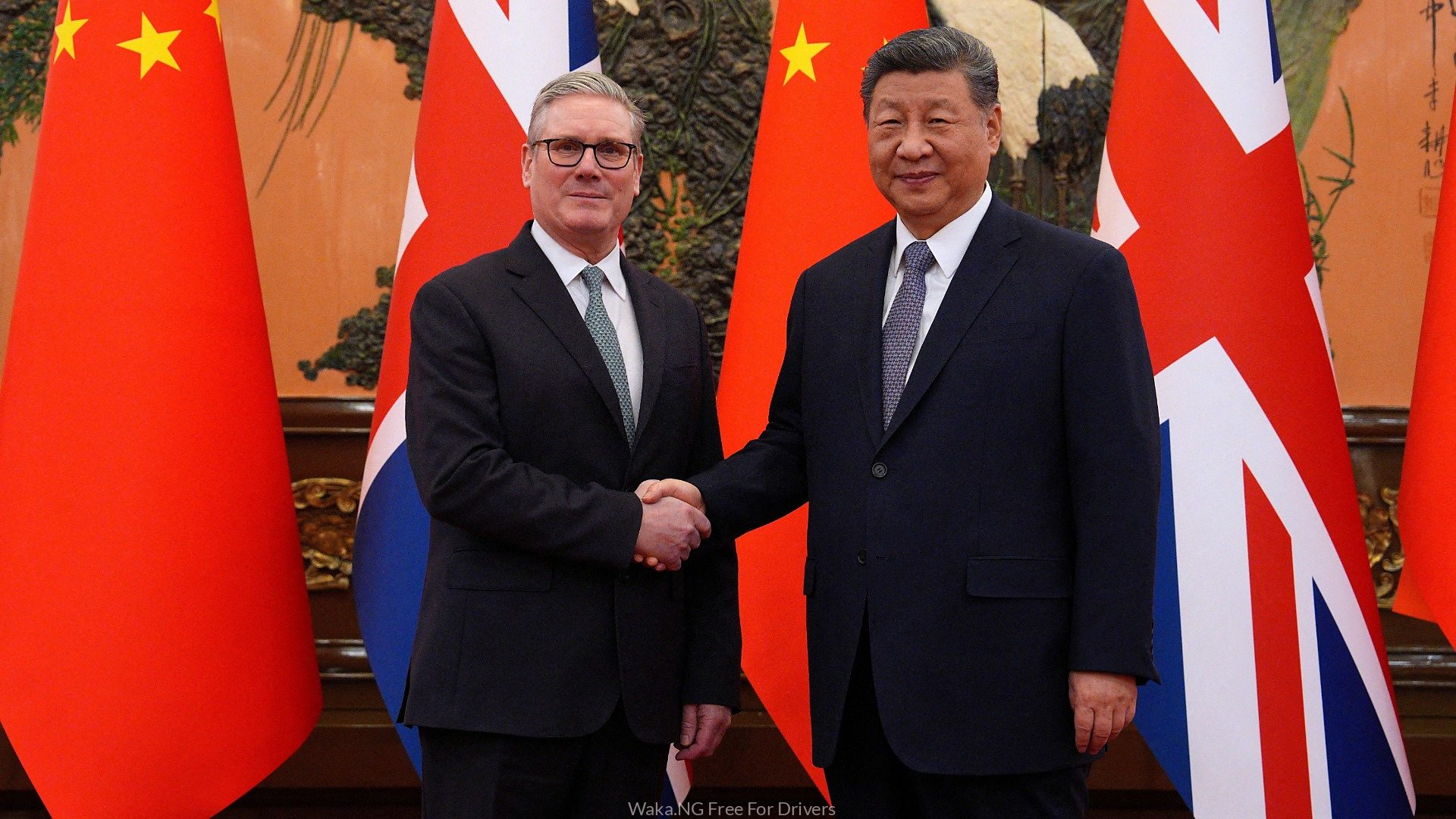
UK Prime Minister Sir Keir Starmer’s visit to China, his meeting with Chinese President Xi Jinping, what happened, why it matters, and how both countries stand to benefit (and some of the controversies too):

Reuters

Al Jazeera

scmp.com

taipeitimes.com

scmp.com
🇨🇳 1. What Happened on the Visit
-
Sir Keir Starmer made an official visit to China from late January 2026 — the first visit by a British prime minister in eight years.
-
In Beijing, he held high-level talks with President Xi Jinping at the Great Hall of the People, aiming to “reset” and strengthen UK-China relations after years of strain and diplomatic ice-ages.
-
Both leaders agreed on building a long-term, stable and comprehensive strategic partnership — signalling a new chapter in bilateral ties.
-
Starmer also visited other cities, including Shanghai, and met British business and cultural delegations.
🤝 2. Key Agreements and Outcomes
📊 Strategic Political Reset
-
China and the UK committed to a strategic partnership focused on dialogue, mutual respect, and cooperation across multiple fields.
-
Xi said both countries should “rise above differences” and work together for global peace and stability.
🛂 Visa and Travel
-
China agreed to ease visa rules — including visa-free travel for UK citizens for stays up to 30 days, boosting tourism and business links.
💷 Trade and Economic Deals
-
Numerous trade and economic outcomes were struck:
-
Tariff cuts on UK exports such as Scotch whisky — making British goods more competitive in the Chinese market.
-
Bilateral export deals worth billions of pounds over the next five years and Chinese investment in UK sectors.
-
A feasibility study toward a bilateral services agreement was launched, covering services like finance, legal, healthcare and education.
-
🧪 Cooperation in Future Technologies
-
Agreements to boost joint work in artificial intelligence, biosciences, new energy and low-carbon technologies, which are strategic for economic growth and climate goals.
🇬🇧 Other Diplomatic Advances
-
China reportedly lifted sanctions on some British MPs, which had been a point of tension.
-
Dialogue resumed on security, economic, and intercultural exchanges, laying groundwork for regular strategic talks.
🌍 3. Why This Visit Matters
📈 For the UK:
Economic Growth & Jobs
-
Boosting trade and investment is seen as a way to stimulate the UK economy, create jobs, and support British businesses accessing one of the world’s largest markets.
-
Reducing barriers like tariffs and travel restrictions makes it easier for UK industries to grow abroad.
Diversifying Partnerships
-
Starmer argued that the UK must engage globally and not be overly dependent on any one partner (including the US) — aiming to balance diplomatic and economic interests.
Strategic Engagement
-
Re-establishing regular high-level dialogues reduces unpredictability in international relations.
🐉 For China:
Political Prestige & Stability
-
China gains diplomatic recognition from a major Western country and reinforces its image as a key global partner.
-
Strengthened ties with the UK help China navigate global challenges and multilateral forums like the UN Security Council.
Economic Cooperation
-
Chinese firms gain access to British markets and investment opportunities, and joint projects advance shared technological goals.
-
Increased people-to-people exchange supports tourism, education and cultural cooperation.
🔍 4. Controversies and Criticisms
Not everyone agrees the trip was an unmitigated success:
-
Some British voices argue the visit offered symbolic gestures rather than deep solutions on human rights and security issues, saying China’s concessions were limited.
-
Others say lifting sanctions on MPs did not address broader political concerns like human rights in Hong Kong or Xinjiang.
🖋️ 5. In Summary
Starmer’s China visit was highly strategic and historic, aiming to:
✅ Rebuild and modernize Britain-China relations
✅ Expand trade, investment and economic ties
✅ Address political and security concerns through dialogue
✅ Enhance cooperation on global challenges like technology and climate
While diplomatic tensions and criticisms remain, both countries framed the talks as a pragmatic reset that could yield economic and geopolitical benefits if commitments translate into long-term action.

The Guardian

The Guardian
The Sun
The Sun
🧑💼 1. Keir Starmer and the UK Government
Starmer’s own framing:
-
Starmer says the China visit was successful and necessary for UK interests — boosting trade, securing visa-free travel, and lifting some sanctions — while keeping the alliance with the United States strong and not being isolationist.
-
He defended the engagement as pragmatic diplomacy, arguing that talking to China and pursuing economic opportunities is in Britain’s national interest.
-
Starmer highlighted the business delegation and optimism from UK companies present, and said Britain needs to better “talk itself up” about its strengths.
Government messaging emphasized real results such as visa-free travel, tariff reductions, and future talks on trade — framing the visit as a reset after years of chilly relations.
🧑💼 2. Reactions from Opposition Parties
Conservative Party voices:
-
Conservative politicians such as Kemi Badenoch and others have been critical, calling the visit weak and warning that Starmer’s alignment with China could undermine national security and embolden authoritarian behaviour abroad.
-
Ex-Conservative MP Tom Tugendhat (previously sanctioned by China) described the lifting of sanctions as a “hollow victory”, arguing that it didn’t address deeper issues like cyber threats and human rights.
Liberal Democrats, through figures like Daisy Cooper, also criticised Starmer for seeming to travel “cap in hand” rather than assertively.
Overall, much of the opposition has framed the visit as too conciliatory or lacking leverage on human rights and security concerns.
🎙️ 3. Public Commentators & Media Reactions
Domestic criticism:
-
Several columnists and media voices have labelled the visit as symbolic rather than substantive, arguing that it prioritised trade over issues like human rights abuses and geopolitical risk.
-
Some commentators highlighted Starmer’s handling of concerns about China’s foreign influence and spy activities, framing them as unresolved tensions despite the diplomatic reset.
Foreign reactions highlighted in British media:
-
Chinese state media portrayed the visit as economic pragmatism and a mutual recalibration after years of strained ties, praising the focus on business and cooperation.
🇺🇸 4. Allies’ Reactions & Wider Geopolitics
While not UK domestic politics directly, reactions from key allies also feature in discussions of the visit:
-
U.S. President Donald Trump publicly warned that closer UK-China business ties could be “very dangerous”, though Starmer dismissed those comments as mis-directed and stressed UK–U.S. alliance continuity.
-
This comment illustrates how Starmer’s China diplomacy intersects with broader West-U.S. geopolitical strategy debates.
🧠 5. Parliamentarians Directly Affected by Sanctions
A notable British response came from MPs who were previously sanctioned by China for raising human rights issues (such as in Xinjiang):
-
Some expressed that lifting the sanctions gave them no comfort if it meant sidelining broader accountability for human rights abuses.
-
They indicated their intention to continue speaking out regardless of travel permissions.
📊 Summary of the Political Landscape
| Group or Voice | General Reaction |
|---|---|
| Starmer & Labour Government | Positive framing; pragmatic reset; economic and diplomatic gains |
| Conservative Politicians | Critical; warns of weakness and risk to security |
| Liberal Democrats | Critical of approach and tone |
| Former Sanctioned MPs | Mixed; appreciate visa relief but see it as insufficient |
| Media / Commentators | Split; from praise of pragmatism to critique of concessions |
| Allied Leaders (e.g., Trump) | Wary or critical of UK-China rapprochement |