
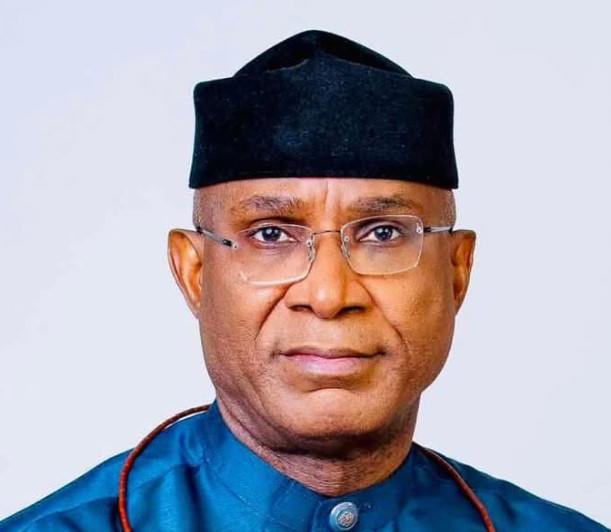
By Chukwudi Abiandu
Senator Ovie Omo-Agege’s remarks at the January 23, 2026 APC high-level stakeholders’ meeting in Asaba were short, polite, and outwardly conciliatory. But beneath the measured tone lay a speech heavy with subtext, unresolved tensions, and quiet warnings to a party still struggling to reconcile conquest with coexistence.
At first glance, the former Deputy Senate President sounded like a man extending an olive branch. On closer examination, he was also drawing lines.
The Invitation That Exposed a Crack
Omo-Agege opened by thanking Governor Sheriff Oborevwori for personally inviting him to the meeting. On the surface, this appeared to be a gracious acknowledgment. In reality, it exposed a troubling institutional failure within the Delta APC.
This was a party stakeholders’ meeting, not a private political caucus. Under normal circumstances, the APC Delta State secretariat, under the direction of the state chairman, Chief Omeni Sobotie should have formally invited all major stakeholders, especially the party’s immediate past governorship candidate. Why didn’t it? Why did it take the personal intervention of Governor Oborevwori for Omo-Agege to be notified?
The implication is stark: but for the Governor’s personal initiative, Omo-Agege may not have attended at all, not out of boycott, but out of deliberate exclusion. And had that happened, the same party machinery that failed to notify him would likely have been quick to weaponise his absence as evidence of disloyalty.
That single line in Omo-Agege’s speech quietly indicted the APC secretariat and raised unavoidable questions about animosity, selective inclusion, and internal gatekeeping. More damningly, it raised the question of why the state chairman appears either unwilling or unable to rein in a secretariat acting in ways that deepen factional suspicion.
Acknowledging Leadership Without Surrendering Ambition
Omo-Agege recognised Governor Oborevwori as the leader of the party in the state and pledged to work with him to ensure good governance. Notably, however, he was careful not to pledge electoral subservience.
This distinction matters. Nowhere in his remarks did Omo-Agege say he would work for Oborevwori politically, campaign for him, or support a second-term project. Instead, he committed himself to governance, not elections. That was not an oversight. It was a calculated separation.
In Delta APC today, cooperation in governance is being subtly framed as an expectation of political loyalty. Omo-Agege’s speech resisted that framing. He made it clear, politely but firmly that working together does not automatically translate into surrendering political ambition.
The 240,000 Votes as Political Currency
Perhaps the most consequential part of the speech was Omo-Agege’s reminder that over 240,000 Deltans voted for him in 2023, forming a “huge organic political following” that remains mobilisable. This was not nostalgia. It was leverage.
The ball, unmistakably, is now in the court of the party leadership.
The post Deconstructing Omo-Agege: Between courtesy, caution and a quiet power struggle appeared first on Vanguard News.