News Shared on Time is News Heard !
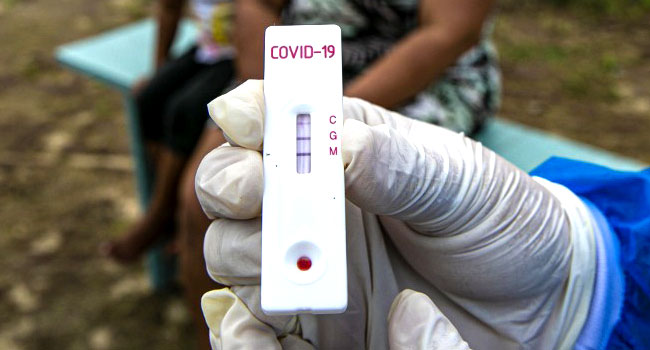
In this file photo taken on June 1, 2020, a healthcare worker holds a Covid-19 test kit.


The Nigeria Centre for Disease Control (NCDC) has insisted that coronavirus (COVID-19) tests conducted within its molecular laboratories across the country are free.

It stated this on Sunday via its verified Twitter handle.

According to the agency, the scale-up of testing is key in assessing the nation’s COVID-19 situation and coordinating response across the country.

The 61 NCDC facilities are located in 30 states across the country and the Federal Capital Territory (FCT).

Some of them include the State Specialist Hospital, Amachara in Abia State; Federal Medical Centre, Yola, Adamawa; Molecular Diagnostics Laboratory, Akwa Ibom; and Virology Lagos University Teaching Hospital, Lagos, among others.


NCDC’s tweet came amid the controversy over the COVID-19 tests to be conducted for SS3 students preparing for the West African Senior School Certificate Examination (WASSCE) in Ogun State.
covid-19 update
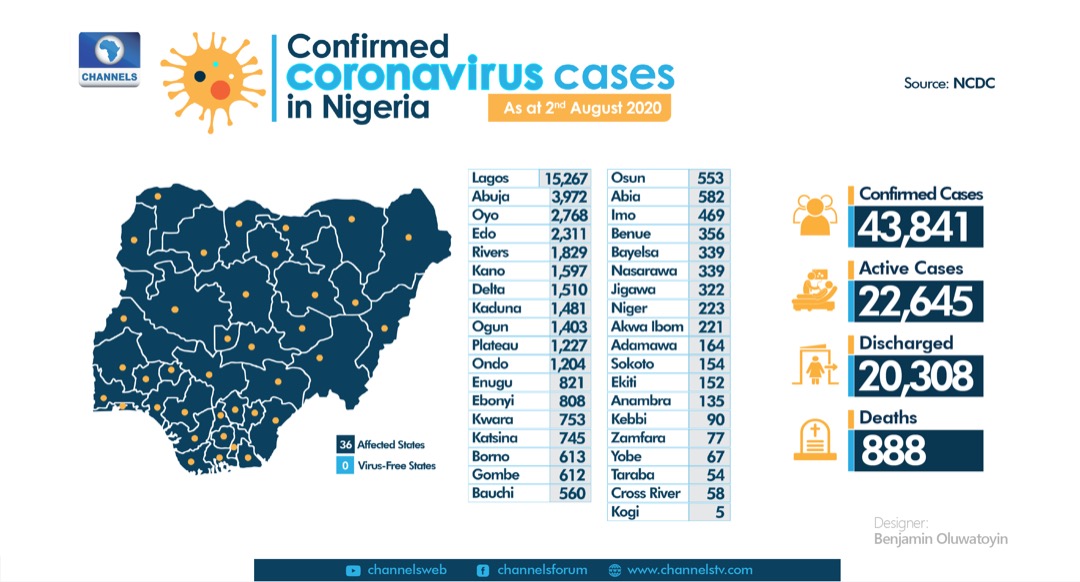
A map showing Nigeria’s COVID-19 cases as of August 2nd, 2020. Channels TV/Benjamin Oluwatoyin.


Ahead of the resumption of revision classes for the students, the state government had asked them to take the tests for COVID-19 and malaria.

While the government said it would be responsible for the cost for students in public schools, it asked parents/ owners of private schools to do the same for their students.

Search on Sells.ng Nigeria's First Ecommerce Shopping Search Engine ...For More About This Post or Search on OjoOjo.com : Ogun Govt Clarifies Requirements For COVID-19 Test For Students

This led to a protest in Abeokuta, the state capital by some parents of private school students over the purported payment of N25,000 for the test.

In its reaction, the government said it has decided to further assist the private schools by negotiating “a huge discount” in the cost of the COVID-19 test with some healthcare service providers.

It, however, advised private school owners and parents to engage any other service provider of their choice as long as they were certified by the NCDC as COVID-19 Test service providers.

See the full list of the 61 NCDC laboratories below:

S/N LABORATORIES STATE TYPE
1 State Specialist Hospital, Amachara lab Abia GeneXpert
2 State Specialist Hospital , Amachara PCR Laboratory
3 Federal Medical Centre Yola Adamawa PCR Laboratory
4 Molecular Diagnostics Laboratory, Akwa Ibom State Akwa-Ibom PCR Laboratory
5 Accunalysis medical diagnostics Anambra PCR Laboratory
6 COOUTH Awka Abbott lab PCR Laboratory
7 Bauchi state Reference Laboratory Bauchi PCR Laboratory
8 Abubakar Tafawa Balewa University Teaching Hospital PCR Laboratory
9 161 AHM lab Benue GeneXpert
10 University of Maiduguri Teaching Hospital Borno PCR Laboratory
11 Lawrence Henshaw Memo Calabar Cross Rivers GeneXpert
12 UCTH Lab
13 Delta Mobile Laboratory Delta PCR Laboratory
14 Alex Ekwueme Federal University Teaching Hospital Ebonyi PCR Laboratory
15 Irua Specialist Teaching Hospital Edo PCR Laboratory
16 University of Benin Teaching Hospital PCR Laboratory
17 Edo Specialist Hospital, Benin PCR Laboratory
18 Ekiti – 54gene Ekiti PCR Laboratory
19 University of Nigeria Teaching Hospital lab Enugu GeneXpert
20 University of Nigeria Teaching Hospital Molecular Virology Laboratory PCR Laboratory
21 Everight diagnostics and Laboratory services Ltd Imo PCR Laboratory
22 Federal Medical Centre Owerri lab GeneXpert
23 Jigawa molecular lab Jigawa PCR Laboratory
24 DNA laboratory Kaduna PCR Laboratory
25 Africa Centre of Excellence for Neglected Tropical Diseases and Forensic Biotechnology, Ahmadu Bello University Zaria PCR Laboratory
26 Mobile lab Kaduna GeneXpert
27 Yusuf Dansoho Memorial Hospital lab GeneXpert
28 Aminu Kano Teaching Hospital Kano PCR Laboratory
29 54gene Kano PCR Laboratory
30 International Foundation Against Infectious Diseases in Nigeria (IFAIN) PCR Laboratory
31 EHAlab Kano PCR Laboratory
32 Bayero University Kano PCR Laboratory
33 Sahel Centre for Molecular Diagnostics and Research, Katsina Katsina PCR Laboratory
34 State Specialist Hospital Kogi lab Kogi GeneXpert
35 Sobi Specialist Hospital Kwara PCR Laboratory
36 Virology Lagos University Teaching Hospital Lagos PCR Laboratory
37 Nigeria Institute for Medical Research Closed System
38 Biosafety Level-3 Laboratory PCR Laboratory
39 54gene Lagos PCR Laboratory
40 NCDC Central Public Health Labortaory PCR Laboratory
41 Zankli lab Nasarawa GeneXpert
42 54gene Ogun Ogun PCR Laboratory
43 Afriglobal Medicare Laboratory PCR Laboratory
44 FMC Owo Ondo PCR Laboratory
45 African Centre of Excellence for Genomics of Infectious Diseases Osun PCR Laboratory
46 University College Hospital Virology department laboratory Oyo PCR Laboratory
47 Biorepository and clinical virology lab, University College Hospital PCR Laboratory
48 National Veterinary Research Institute Plateau PCR Laboratory
49 Jos University Teaching Hospital lab GeneXpert
50 University of Port Harcourt Teaching Hospital Rivers PCR Laboratory
51 Rivers State University Teaching Hospital Satallite Molecular Laboratory PCR Laboratory
52 SPDC (shell) lab PCR Laboratory
53 Indorama Company Molecular Laboratory PCR Laboratory
54 Centre for Advanced Medical Research and Training, Usmanu Danfodio University Sokoto PCR Laboratory
55 NCDC National Reference Laboratory FCT PCR Laboratory
56 Defense Reference Laboratory Closed System
57 FCT – 54gene PCR Laboratory
58 State House Annex Clinic lab (SHAC) PCR Laboratory
59 University of Abuja, Gwagwalada Laboratory GeneXpert Laboratory
60 United Nations IOM Lab GeneXpert Laboratory
61 Molecular Diagnostics Laboratory, Gombe State Specialist Hospital Gombe PCR Laboratory

By john

You missed

After Fela – Top 10 Nigerian celebrities who promote drugs alcohol and weed and their effects on nigerian youth and why the NDLEA needs to prosecute themTop 10 Nigerian Celebrities Accused of Promoting Drugs, Alcohol, and Weed: Influence on Youth and the Case for NDLEA Action An Investigative Analysis of Celebrity Influence in Nigeria’s Drug Crisis Nigeria grapples with a devastating drug abuse epidemic, with NDLEA reporting over 14 million users, many of them youths aged 15–35. While socioeconomic factors, unemployment, and peer pressure drive this crisis, studies consistently highlight the role of celebrity culture — particularly in music, social media, and videos — in normalizing and glamorizing substance use. This article examines ten prominent Nigerian celebrities frequently criticized for promoting drugs, alcohol, and cannabis (weed) through lyrics, visuals, and lifestyles. It explores the documented effects on Nigerian youth and why the NDLEA and broader society argue for stronger accountability. Top 10 Celebrities Often Cited for Promotion Naira Marley Frequently called out for lyrics and social media content that celebrate “Igbo” (weed) and street drug culture. His “Marlian” movement has been linked to rebellious youth subcultures involving substance use. Burna Boy Grammy winner whose tracks like “Last Last” openly reference needing “Igbo and Shayo” (weed and alcohol). His public persona and videos often portray substance use as part of the rockstar lifestyle. Wizkid Regularly posts smoking-related content on Instagram and features relaxed, party-oriented themes involving alcohol and weed in his music and visuals. Davido High-profile party lifestyle posts and songs that celebrate excess, including heavy drinking and occasional weed references, influence his massive young fanbase. Asake Emerging star whose energetic tracks and visuals often incorporate street drug slang and party culture centered on alcohol and cannabis. Olamide Veteran rapper known for gritty street narratives that frequently glorify weed and alcohol as coping mechanisms or symbols of success. Shallipopi Newer artist criticized for lyrics and statements that normalize cannabis use, though he has occasionally distanced himself in interviews. Tiwa Savage Her music video “Asake Loaded” drew academic scrutiny for drug-related portrayals that researchers say influence undergraduates toward experimentation. Zlatan and other street-hop artists Aggressive promotion of “skunk,” “loud,” and lean culture in music and social media. Olamide’s protégés and similar acts (e.g., certain DMW and YBNL affiliates) Collective influence through group dynamics that celebrate “high life” with visible alcohol and weed consumption. Note: Many of these artists also produce non-drug content and some have spoken against hard drugs. Categorization here reflects public criticism and research on recurring themes rather than blanket condemnation. Artistic freedom complicates direct blame. Effects on Nigerian Youth Research paints a concerning picture: Normalization and Imitation: A 2025 study in Lagos found 97% of surveyed youths follow celebrities who display drugs online, with 68.6% believing such displays influence substance abuse. Repeated exposure increases the likelihood of experimentation. Validation and Peer Pressure: Celebrities provide social proof that makes alcohol (ranked highest), cannabis, codeine, and Tramadol seem “cool” or performance-enhancing for parties, exams, or hustling. Behavioral Impact: High negative influence scores (RII 0.56–0.75) link celebrity portrayals to increased daily substance use among students. Music videos and social media act as subtle campaigns that glamorize risk-taking. Broader Consequences: Contributes to higher school dropouts, mental health issues (psychosis, depression), crime, and health complications like organ damage. With cannabis ranking second only to alcohol in usage, youth in urban centers like Lagos, Onitsha, and Jos face heightened vulnerability. Youths often cite celebrities as role models, turning artistic expression into perceived endorsement. Why NDLEA Needs to Prosecute (or Strongly Regulate) NDLEA officials have publicly placed certain celebrities on watchlists and stated that while lyrics alone may not warrant arrest (due to free speech protections), actual possession, trafficking, or direct incitement crosses into criminal territory. Arguments for Stronger Action: Public Health Emergency: With millions addicted, influencers bear moral and potential legal responsibility when their platforms reach millions of impressionable fans. Displacement of Accountability: Celebrities profit from glamorized content while NDLEA bears the burden of treatment and enforcement. Prosecution for possession or sponsorship of drug-related events would send a deterrent message. Inconsistent Standards: NDLEA arrests everyday users and dealers aggressively. Celebrities appearing above the law undermines public trust and enforcement credibility. Precedent and Impact: Past arrests of lesser-known figures (e.g., skit makers with Tramadol) show the agency can act. Extending scrutiny to high-profile cases could reduce supply and demand by curbing cultural glorification. Critics argue prosecution for art risks censorship, and NDLEA’s mandate focuses more on trafficking than cultural influence. Better tools may include mandatory anti-drug messaging in sponsored content, fines for blatant promotion, or collaboration with NBC for content regulation. Conclusion: Balancing Art and Responsibility Nigerian celebrities wield enormous soft power. When that power normalizes substances fueling a generational crisis, society suffers. While not every party reference equals promotion, the cumulative effect of repeated, glamorous depictions is undeniable per multiple studies. NDLEA must evolve beyond seizures to address root cultural drivers. This could mean targeted investigations into possession among influencers, public shaming through evidence-based campaigns, or partnerships for responsible messaging. Youths deserve role models who inspire productivity, not escapism. Nigeria’s future hinges on protecting its greatest asset — its young people — from both the drugs themselves and the superstar lifestyles that make them look desirable. Accountability, not just awareness, is urgently needed.

From Tramadol to Canadian to Exol-5 The New Drug Destroying Nigerian Youths An Investigative Article .From Tramadol to Canadian to Exol-5: The New Drug Destroying Nigerian Youths An Investigative Report on the Shifting Landscape of Substance Abuse in Nigeria Nigeria faces a severe and evolving drug crisis, particularly among its youth. What began with the widespread abuse of Tramadol has progressed through mixtures like “Canadian” to newer pharmaceutical diversions such as Exol-5. This shift reflects deeper issues: easy access to prescription drugs, weak regulation, socioeconomic pressures, and aggressive street-level marketing. NDLEA operations and health studies reveal a public health emergency that threatens an entire generation. Phase 1: The Tramadol Epidemic (2010s–Early 2020s) Tramadol, a synthetic opioid prescribed for moderate to severe pain, became Nigeria’s most notorious street drug. Cheap, potent, and widely smuggled (often from India and other Asian countries), it offered users energy, euphoria, and pain relief — appealing to commercial drivers, laborers, students, and young men seeking confidence or stamina. Scale of the Problem: Millions of tablets seized annually by NDLEA. High prevalence among young males aged 15–35. Linked to increased crime, sexual violence, organ damage (kidney failure, seizures), and mental health breakdowns. Contributed to broader opioid misuse alongside codeine cough syrups. Government responses included tighter import controls and public awareness campaigns, but these only displaced demand to other substances rather than eliminating it. Phase 2: The Rise of “Canadian” (Mid-2020s) “Canadian” or “Canadian Loud” emerged as a popular code for high-grade cannabis (often indica-dominant strains) or cannabis mixed with other synthetics. It gained traction as users sought alternatives or combinations to Tramadol’s effects. This phase marked a move toward imported or locally cultivated premium weed, sometimes laced with stronger chemicals. Youths in urban centers like Lagos, Kano, Jos, and Onitsha embraced it for its perceived “cleaner” high compared to opioids. However, it fueled polydrug use — combining cannabis with opioids, sedatives, or alcohol — amplifying health risks. Phase 3: Exol-5 – The Current Threat (2024–2026) Exol-5 (Benzhexol Hydrochloride / Trihexyphenidyl 5mg), originally a prescription medication for Parkinson’s disease and drug-induced movement disorders, has become the latest pharmaceutical being heavily abused. Why Exol-5? Euphoric Effects: Users report intense euphoria, hallucinations, and a sense of detachment — making it attractive as a cheap “upper” or escape. Accessibility: Sold over-the-counter or on the black market despite being a controlled prescription drug. NDLEA has seized millions of pills in single operations (e.g., 3.1 million pills in Kano in late 2024, and over 5.6 million combined with Tramadol in other busts). Street Names: Exol, Artane, Benzhexol, “Farin Mallam” (in Northern Nigeria). Demographics: Prevalent among youths, laborers, and even psychiatric patients who divert prescriptions. Studies show abuse rates as high as 25% among certain outpatient groups. Health Consequences: Anticholinergic toxicity: Confusion, dry mouth, blurred vision, urinary retention, constipation, and in high doses — delirium, psychosis, seizures, and heart issues. Long-term: Cognitive impairment, addiction, exacerbated mental health disorders. Often mixed with Tramadol, codeine, or cannabis, creating dangerous synergies. In cities like Jos, Exol-5 sits alongside diazepam, Rohypnol, and Tramadol on street markets, easily available to teenagers and young adults. Why This Evolution Continues Supply-Side Failures: Porous borders, corrupt officials, and overproduction of pharmaceuticals enable diversion. Demand Drivers: Unemployment, poverty, peer pressure, trauma, and the pursuit of performance enhancement (e.g., for “hustle” culture). Weak Regulation: Many pharmacies sell restricted drugs without prescriptions. Online and street vendors fill gaps. Displacement Effect: Cracking down on one substance (Tramadol/codeine) pushes users and dealers toward the next available option. NDLEA reports ongoing large seizures, but the problem persists due to high profitability and low risk for mid-level distributors. Broader Impacts on Nigerian Youths Education: Increased dropout rates and poor academic performance. Mental Health: Rising cases of psychosis and depression. Economy: Lost productivity among the working-age population. Crime and Violence: Drug-fueled robberies, cultism, and family breakdowns. Public Health System Strain: Overburdened hospitals treating overdoses and chronic complications. Young people aged 15–39 remain the hardest hit, with national surveys showing drug use prevalence significantly above global averages. What Must Be Done Stronger Enforcement: Consistent prosecution of corrupt enablers and large-scale traffickers. Regulation: Crackdown on rogue pharmacies and better tracking of prescription drugs. Prevention & Rehabilitation: School programs, community outreach, and expanded treatment centers (currently woefully inadequate). Economic Alternatives: Address root causes like youth unemployment. Public Awareness: Honest campaigns highlighting real dangers of “Exol-5” and similar drugs. Conclusion From Tramadol’s opioid grip to “Canadian” cannabis culture and now Exol-5’s anticholinergic highs, Nigeria’s drug crisis is mutating faster than responses can contain it. Exol-5 represents the dangerous new frontier — a legitimate medicine turned youth destroyer due to misuse and greed. Without urgent, multi-layered intervention — combining supply disruption, demand reduction, and socioeconomic support — an entire generation risks being lost to addiction. The time for half-measures is over. Nigeria’s future depends on winning this fight.