

Probably a Last Ditch Attempt for Netanyahu & Trump to Re Align Their Political Base
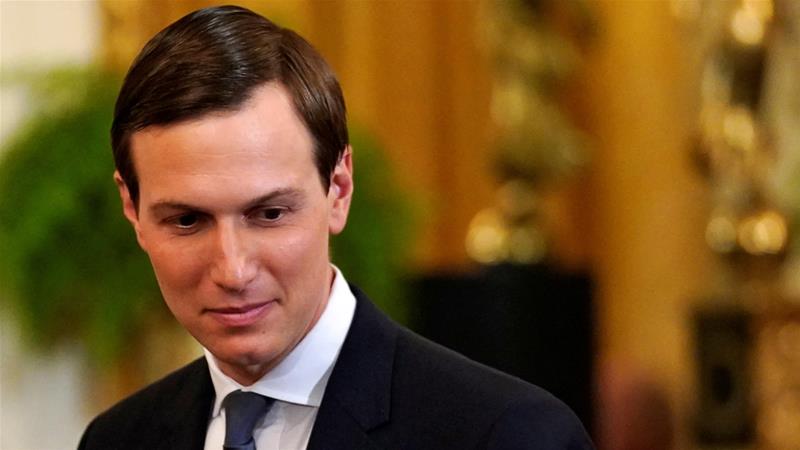
Jared Kushner
 Description
Jared Corey Kushner is an American investor, real-estate developer, and newspaper publisher who is senior advisor to his father-in-law, Donald Trump, the president of the United States.
Wikipedia
Born: 10 January 1981 (age 39 years), Livingston, New Jersey, United States
Spouse: Ivanka Trump (m. 2009)
Office: White House Innovations Director since 2017
Education: NYU School of Law (2007), MORE
Children: Arabella Rose Kushner, Joseph Frederick Kushner, Theodore James Kushner
Awards: Order of the Aztec Eagle
Probably The Real Don Junior & Architect of Donald Trump’s Election and Brains behind Re Election
WASHINGTON — US President Donald Trump’s son-in-law and senior adviser Jared Kushner said Thursday that more Arab countries may soon announce normalized ties with Israel, following an American-brokered agreement between Israel and the United Arab Emirates.
“We hope this is an icebreaker where Israel can now normalize relations with other countries,” Kushner said at a press briefing shortly after Trump announced the pact, adding that he thought there was a “very good chance” of another Israeli-Arab deal within months.
Kushner said that the administration had also been in talks with other Arab states to normalize ties with Israel. He suggested that more announcements will come over the next 90 days.
“We have a couple who were upset that they weren’t first,” Kushner said. “But … we will work very hard to create more and more normalizations over the coming time ahead.”
“I do think that this makes them more inevitable,” he continued. “But it will take trust being built and dialogue being facilitated. Hopefully, this makes it easier for others.”
At one point, he was asked which other countries were in the mix. “Who is next?” Kushner asked back. “You will find out next.”
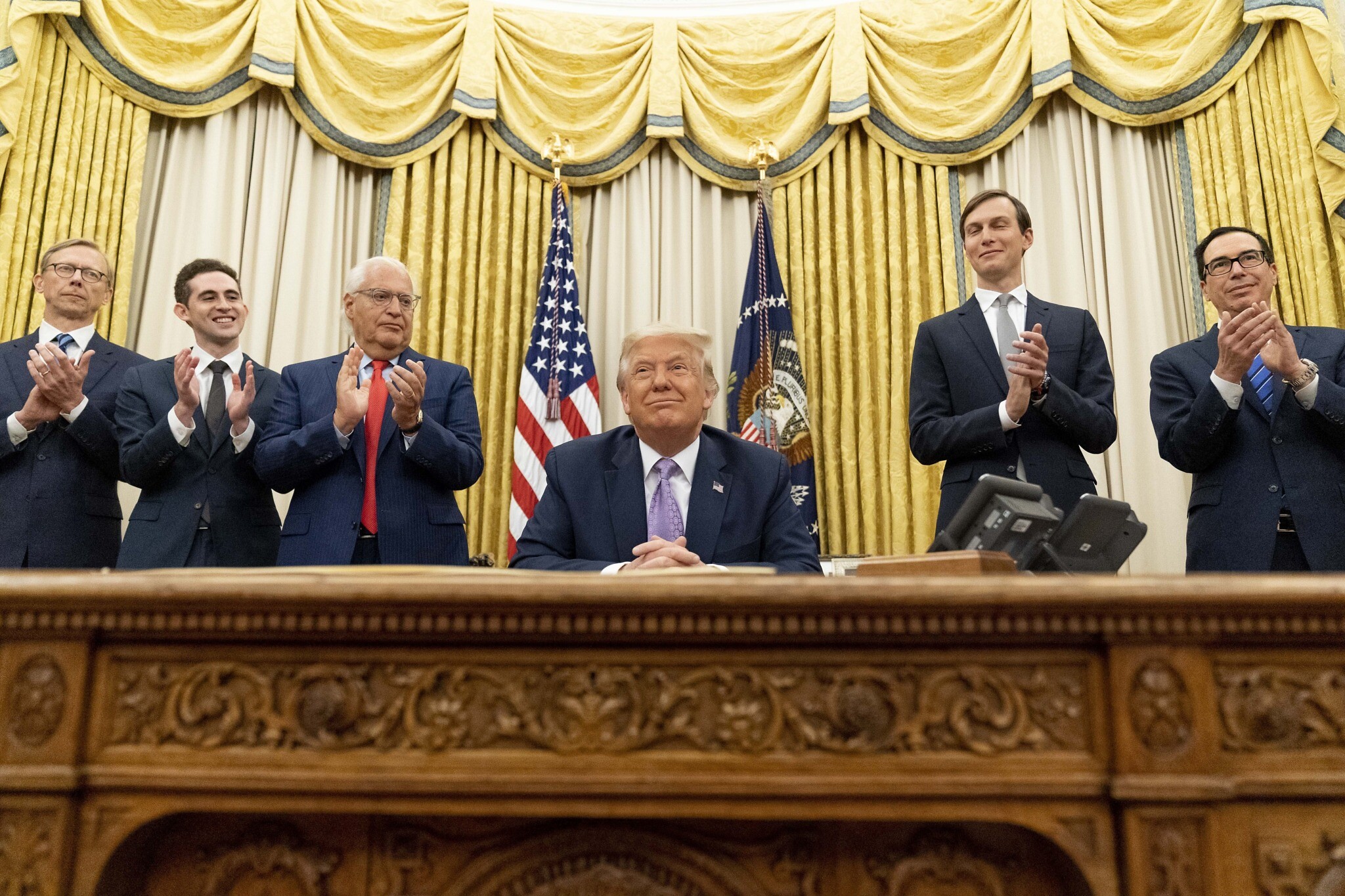
Earlier Thursday, in a joint statement with the US first issued by Trump, Israel and UAE said they had reached a historic to set up full diplomatic relations, the third such agreement the Jewish state has struck with an Arab country after Egypt and Jordan.
This marked the first peace deal in the region since 1994, when Israel normalized relations with Jordan.
Israeli and UAE delegations will meet in the coming weeks to sign bilateral agreements regarding investment, tourism, direct flights, security and the establishment of reciprocal embassies, the statement said.
After Israel-UAE deal, Kushner indicates more Arab countries will follow
Trump adviser says some other countries ‘were upset they weren’t first,’ adds US began working on ties between the two states 18 months ago; ramped up as annexation bid accelerated
How the world reacted to UAE, Israel normalising diplomatic ties
Nations, groups and individual stakeholders in Israeli-Palestine conflict react to UAE and Israel normalising relations.
“Not a lot of the moves were visible for the public to see,” Kushner said, “but there was a lot of action behind the scenes. Had we been telegraphing that we were working on this, it would have made it a lot harder for it to happen.”
Kushner, who Trump tasked with leading his efforts to broker an Israeli-Palestinian peace agreement, told reporters that discussions for a deal with UAE had been in the works for “about a year and a half.”
They became more serious, however, after Netanyahu moved toward meeting a self-imposed July 1 deadline to start annexing West Bank territory, he said.
“That obviously was something that UAE felt would set back all the advancements that we’ve made in the region,” Kushner said.
The United Arab Emirates has become the first Gulf Arab country to reach a deal on normalising relations with Israel, capping years of discreet contacts between the two countries in commerce and technology.
The so-called “Abraham Agreement”, announced by United States President Donald Trump on Thursday, secures an Israeli commitment to halt further annexation of Palestinian lands in the occupied West Bank.
However, addressing reporters later in Tel Aviv, Israeli Prime Minister Benjamin Netanyahu said he agreed to “delay” the annexation as part of the deal with the UAE, but the plans remain “on the table”.
The UAE is also the third Arab nation to reach such a deal with Israel, after Jordan and Egypt.
Here is how other nations and the various stakeholders in the Israeli-Palestinian conflict reacted to the Israel-UAE deal:
Palestinian leadership
|
|
In a statement issued by his spokesman, Palestinian President Mahmoud Abbas denounced the accord.
“The Palestinian leadership rejects and denounces the UAE, Israeli and US trilateral, surprising announcement,” said Nabil Abu Rudeineh, a senior adviser to Abbas.
Abu Rudeineh, reading from a statement outside Abbas’s headquarters in Ramallah in the occupied West Bank, said the deal was a “betrayal of Jerusalem, Al-Aqsa and the Palestinian cause.”
Hanan Ashrawi, an outspoken member of the Palestinian Liberation Organization’s executive committee who has served in various leadership positions in Palestine, said the UAE’s announcement was the equivalent of being “sold out” by “friends”.
Hamas
Hamas rejected the US-brokered deal establishing formal ties between Israel and the UAE in exchange for Israel dropping its plans to annex land in the occupied West Bank, saying it did not serve the cause of the Palestinians.
“This agreement does absolutely not serve the Palestinian cause, it rather serves the Zionist narrative. This agreement encourages the occupation [by Israel] to continue its denial of the rights of our Palestinian people, and even to continue its crimes against our people,” Hamas spokesman Hazem Qassem said in a statement.
“What is required is to support the legitimate struggle of our people against the occupation and not to establish agreements with this occupier, and any annexation we will face by a Palestinian confrontation that is supported by the Arabs and internationally, and not by signing normalisation agreements with them [Israel].”
United Arab Emirates
The UAE’s minister of state for foreign affairs, Anwar Gargash, defended the deal. Abu Dhabi Crown Prince’s Mohammed bin Zayed decision to normalise ties with Israel reflected “badly needed realism,” he said.
|
|
“While the peace decision remains basically a Palestinian-Israeli one, the bold initiative of Sheikh Mohammed bin Zayed has allowed, by banishing the spectre of annexing Palestinian lands, more time for peace opportunities through the two-state solution,” Gargash said in a series of tweets.
“Developing normal ties in return for this is a realistic approach forwarded by the Emirates,” he said. “The successful decision is to take and give. This has been achieved.”
Jordan
Jordan said that the UAE-Israel deal could push forward stalled peace negotiations if it succeeds in prodding Israel to accept a Palestinian state on land that Israel had occupied in the 1967 Arab-Israeli War.
“If Israel dealt with it as an incentive to end occupation … it will move the region towards a just peace,” Jordan’s Foreign Minister Ayman Safadi said in a statement on state media.
Israel’s failure to do this would only deepen the decades-long Arab-Israeli conflict and threaten the security of the region as a whole, Safadi said.
Safadi said the agreement must be followed by Israel ending any unilateral moves to annex territory in the occupied West Bank that “obstruct peace prospects and violate Palestinian rights”.
“The region is at a crossroads … continued occupation and denial of the Palestinian peoples’ legitimate rights won’t bring peace or security,” Safadi added.
|
|
Jewish settler groups
The move angered right-wing Israeli settlers who want to annex the West Bank.
Netanyahu said that while he had promised to apply Israeli sovereignty to areas, including Jewish settlements, in the territory, which Palestinians seek for a future state, he had made clear he first needed a green light from Washington.
“He deceived us. He has deceived half a million residents of the area and hundreds of thousands of voters,” said David Elhayani, head of the Yesha Council of settlers.
Egypt
Egyptian President Abdel Fattah el-Sisi, a close ally of the UAE, welcomed the agreement.
“I followed with interest and appreciation the joint statement between the United States, United Arab Emirates and Israel to halt the Israeli annexation of Palestinian lands and taking steps to bring peace in the Middle East,” el-Sisi said on Twitter.
“I value the efforts of those in charge of the deal to achieve prosperity and stability for our region.”
Bahrain
The Gulf state of Bahrain welcomed the accord between the UAE and Israel, state news agency BNA said.
The small island state of Bahrain is a close ally of Saudi Arabia, which has not yet commented on the agreement.
Bahrain praised the United States for its efforts towards securing the deal.
Iran
Iran strongly condemned the agreement between Israel and the UAE to normalise ties, calling it an act of “strategic stupidity” that will only strengthen the Tehran-backed “axis of resistance”.
The Iranian foreign ministry denounced the deal as an act of “strategic stupidity from Abu Dhabi and Tel Aviv”.
“The oppressed people of Palestine and all the free nations of the world will never forgive the normalising of relations with the criminal Israeli occupation regime and the complicity in its crimes,” a ministry statement said.
“This is stabbing the Palestinians in the back and will strengthen the regional unity against the Zionist regime.”
Iran’s Tasnim news agency, which is affiliated to the country’s elite Islamic Revolutionary Guard Corps, said the deal between Israel and the UAE on normalising ties was “shameful”.
Turkey
Turkey said history will not forget and never forgive the “hypocritical behaviour” of the United Arab Emirates in agreeing a deal with Israel to normalise relations.
The Palestinian people and administration were right to react strongly against the agreement, the foreign ministry said.
“History and the conscience of the region’s peoples will not forget and never forgive this hypocritical behaviour of the UAE, betraying the Palestinian cause for the sake of its narrow interests,” it said in a statement.
“It is extremely worrying that the UAE should, with a unilateral action, try and do away with the [2002] Arab Peace Plan developed by the Arab League. It is not in the slightest credible that this three-way declaration should be presented as supporting the Palestinian cause.”
Oman
Oman said it backed the normalisation of ties between the neighbouring United Arab Emirates and Israel, and hoped the move would help achieve a lasting Middle East peace.
A foreign ministry spokesman expressed the sultanate’s “support for the UAE’s decision regarding relations with Israel”, according to a statement on Oman’s official news agency.

Germany
Germany welcomed the “historic” deal between Israel and the United Arab Emirates.
The normalisation of ties between the two countries “is an important contribution to peace in the region”, German Foreign Minister Heiko Maas said.
United Kingdom
United Kingdom Prime Minister Boris Johnson praised the agreement between Israel and the UAE.
“The UAE and Israel’s decision to normalise relations is hugely good news,” Johnson said on Twitter.
“It was my profound hope that annexation did not go ahead in the West Bank and today’s agreement to suspend those plans is a welcome step on the road to a more peaceful Middle East.”
France
France welcomed Israel’s decision to suspend its planned annexation of areas of the occupied West Bank under the historic agreement, calling it a “positive step”, Foreign Affairs Minister Jean-Yves Le Drian said in a statement, adding that the suspension “must become a definitive measure”.
The accord paved the way for a resumption of talks between Israelis and Palestinians with the aim to establish two states, he said, calling it “the only option” to achieve peace in the region.
Joe Biden
In a statement, Democratic United States presidential candidate Joe Biden said: “The UAE’s offer to publicly recognize the State of Israel is a welcome, brave, and badly-needed act of statesmanship … A Biden-Harris Administration will seek to build on this progress, and will challenge all the nations of the region to keep pace.”
Biden also addressed annexation: “Annexation would be a body blow to the cause of peace, which is why I oppose it now and would oppose it as president,” he said.
United Nations
Antonio Guterres, the United Nations secretary-general, said he hoped the normalisation of ties between Israel and the UAE can help realise a two-state solution with the Palestinians.
“The secretary-general welcomes this agreement, hoping it will create an opportunity for Israeli and Palestinian leaders to re-engage in meaningful negotiations that will realise a two state-solution in line with relevant UN resolutions, international law and bilateral agreements,” a spokesman for Guterres said in a statement.
“The secretary-general will continue to work with all sides to open further possibilities for dialogue, peace and stability,” the spokesman added.
Reactions on Twitter
Lisa Goldman, co-founder of 972Mag, a news and commentary site focused on Israel and Palestine, said, “Netanyahu never intended to annex” the West Bank, but the UAE is “claiming a diplomatic victory in exchange for what’s probably a lot of very valuable security cooperation from Israel. All on the backs of Palestinians, as usual.”
The move also struck some Palestinians as ill-timed and insulting for the hundreds of thousands of Palestinians who live in the UAE.
Mohammed Hemish, who works in communications at al-Shabaka, the premier Palestinian policy network, chided the UAE for its treatment of Palestinians who moved to the Emirates after the creation of the state of Israel in 1948, which displaced more than 700,000 Palestinians, and subsequent wars that displaced more.
J Street
The left-wing advocacy group J Street welcomed announcements that Israel is suspending plans to annex parts of the West Bank and that the UAE and Israel are taking steps to establish more normalised ties.
“Clarification will be needed that this is not simply a short-term suspension of a disastrous idea, and the United States and the international community should be demanding that Israel commit permanently not to proceed with any unilateral annexation,” the group said in a statement.
“The agreement between Israel and the UAE to move toward fully normalized ties is also welcome news for all who wish to see a stable and prosperous Israel living in peace and security alongside all of its regional neighbours,” the statement read. “It is just the latest evidence that dialogue and diplomacy, rather than unilateral action and belligerence, are the route to long-term security.”
|
|
Ghana
Ras Mubarak, a parliamentarian in Ghana, called the UAE’s move “a betrayal” of the Palestinian people, comparing their plight to that of Black South Africans during the apartheid era.
“During the South African people’s struggle against apartheid, African states formed the frontline of resistance against Pretoria’s brutal regime. From Zambia to Tanzania, to Ghana and Algeria, countries across the African continent provided logistical, political and economic support to South Africa’s liberation struggle,” Mubarak said in a statement.
“All Arab states must treat The apartheid state of Israel in the same way that African states treated apartheid South Africa. There can be no normalization of ties with Israel while the Palestinian people are still occupied; there can be no normalization of ties while Israel still practices apartheid, colonialism and siege against the Palestinians.”
Palestinians unanimously reject UAE-Israel deal
All Palestinian factions, including Hamas and Islamic Jihad, issued statements denouncing the UAE-Israel agreement.
![Palestinians demonstrate against Israeli plans for the annexation of parts of the West Bank [File: Majdi Mohammed/AP]](https://www.aljazeera.com/mritems/imagecache/mbdxxlarge/mritems/Images/2020/7/1/a4261542389345fa8bd60ce7f756f055_18.jpg "Palestinians unanimously reject UAE-Israel deal")
Gaza City – Palestinians reacted with shock and dismay after US President Donald Trump unveiled an agreement between the United Arab Emirates and Israel to normalise ties.
The deal pledges full normalisation of relationships between the two countries in the areas of security, tourism, technology and trade in return for suspending Israel’s annexation plans in the West Bank.
Both the Palestinian leadership and public were caught by surprise when the announcement came on Thursday.
“We absolutely had no prior knowledge of this agreement,” Ahmed Majdalani, the Palestinian Authority’s (PA) minister of social affairs, told Al Jazeera. “The timing and speed of reaching this agreement were surprising, especially that it came at a critical moment in the Palestinian struggle.”
Former PA minister Munib al-Masri noted Sheikh Zayed bin Sultan Al Nahyan, who ruled Abu Dhabi for more than 30 years before his death in 2004, had always been a strong supporter of the Palestinians.
“The late Sheikh Zayed was a dear brother to me, I knew how much he was proud of his support for Palestine… I never imagined that in my lifetime I would see the day in which the UAE would simply sell the Palestinians out for the sake of normalisation,” al-Masri said. “It’s very shameful. I can’t believe it until now.”
Other Palestinian officials said though the news came abruptly, it was not much of a surprise.
“We were not surprised that much because the Emirati army was never on the borders ready to fight Israel,” said Mustafa al-Barghouti, leader of the Palestinian National Initiative and member of the PA parliament.
|
|
“We’ve been seeing recent strange moves by the UAE such as sending direct flights to Israel, and there were leaks of secret accords between the two in terms of scientific and economic cooperation. It is clear that these were preliminary steps to absorb yesterday’s shock.”
Rejecting the agreement
The PA and all Palestinian factions, including Hamas and the Islamic Jihad, issued official statements denouncing the UAE-Israel agreement. Palestinian leaders who spoke to Al Jazeera called it a “stab in the back”.
“We already knew that there has been normalisation going under the table, but to formalise and legalise it that way at this critical moment is shocking. It’s a stab in our back and the back of all Arab nations,” said Majida al-Masri, former PA minister of social affairs.
Al-Barghouti emphasised the deal “doesn’t introduce any change or progress, it’s far from being genuine peace”.
“This is an attempt to enforce the ‘deal of the century’ that aims to liquidate Palestinian national rights, it represents a denial of Palestinian, Arab and Islamic rights,” he said.
Palestinian leaders said the deal was “a free gift to Israel” and was made to help the re-election of Trump and Israeli Prime Minister Benjamin Netanyahu.
“The UAE’s position, in terms of its timing and essence, can only be understood as giving Israel leverage for free,” said Wasel Abu Yousef, member of the PLO’s Executive Committee and leader of the Palestine Liberation Front. “There’s no reasonable justification for it except that it gives more power to the occupation and increases its crimes against the Palestinians.”
Normalising de facto annexation
|
|
Although, Abu Dhabi’s Crown Prince Mohammed Bin Zayed said the agreement “was reached to stop further Israeli annexation”, Palestinians saw little credibility to this claim.
“The UAE is trying to deceive and mislead the public by repackaging this shameful agreement as a service to the Palestinians and claiming that it halts annexation, but that’s merely throwing dust in the eyes,” Majdalani said.
Al-Masri said annexation was “already going nowhere because the entire world was standing against it”.
“So using annexation as a pretext is an exploitation of Palestinians to cover up what’s been done here,” al-Masri said. “But neither the UAE nor other countries are entitled to speak in the name of Palestinians.
“The format of the agreement implicitly approves of Israel’s annexation of Jerusalem. It only opposes ‘further annexation’ while approving what’s been annexed already.”
Palestinian leaders argued the agreement will not stop Israel from extending sovereignty to the West Bank.
“Instead of de jure annexation, Israel is furthering its creeping annexation. It’s accelerating and increasing its aggression on the ground in terms of settlement construction, home demolitions and what’s happening in the Ibrahimi and Al-Aqsa mosques, and in lands that fall in area C,” said al-Masri.
Palestinians noted that Netanyahu had kept the door open to annexation and merely said it was temporarily delayed.
“Netanyahu responded directly to this point and said that annexation is still on the agenda,” al-Masri said. “This is a slap in the face of the UAE – to prove them wrong and embarrass them.”
Breaching Arab positions
Al-Barghouti called the agreement “a divergence from the Arab peace initiative” and “a stab in the back of Arab positions”.
“It even contradicts the interests of the Emirati people themselves and goes against the historic position of the UAE’s previous rulers such as Sheikh Zaid,” he said.
|
|
Majdalani said the deal aims to reshape the Arab approach to the Palestinian-Israeli conflict. “It allows Netanyahu to say that he can achieve peace in return for peace with the Arabs without withdrawing from any territories.”
Al-Barghouti said he fears the agreement will give a pretext to countries such as Germany and the United Kingdom – which welcomed the deal – to look away from the situation.
“But we’re surprised that Arab governments like Bahrain and others would openly express support for this deal. Did they forget the Palestinian people and their rights? Did they forget Jerusalem and Islam?” he said.
Added Abu Yousef: “The world should see Israel’s accelerated and increased crimes on the ground in the occupied territories, not just the threat of annexation.”
‘Struggle will continue’
Despite the disappointment, Palestinians emphasised Thursday’s announcement will not affect their determination to end the occupation.
“Our sacrifices that we gave in confronting this occupation will not go to waste, we will strongly hold on to our rights and principles, supported by all the free people of the world,” said Abu Yousef.
Majdalani the Palestinian leadership was looking a ways to respond. “We took an immediate decision to recall our ambassador to Abu Dhabi and we’re currently having all options on the table to consider.”
Palestinian officials urged the Arab world and international community to act. “The best response to the deal can only come from fellow Arab nations,” al-Masri noted.
Abu Yousef said the PLO “calls on Arab states to issue a unified position against the UAE’s decision, so that there wouldn’t be space for other Arab countries to follow its lead in weakening Arab positions and support to the Palestinians”.
He said the UN’s International Criminal Court (ICC), which may soon announce an investigation into Israeli actions in occupied Palestine, must now act.
“The international community, particularly international organisations like the UN, are now urged more than ever to take responsibility in stopping these crimes and empowering our people. Hence, we call on the ICC to expedite its ruling on holding the occupation accountable,” Abu Yousef said.
Al-Masri concluded: “We still have hope on the Arab people, including the Emirati people who unfortunately cannot express their mind due to terrible state repression. The Arab public still rejects such normalisation.”

Could Israel and Sudan soon become friends?
How did Israel and the UAE get to normalising relations?
Clandestine channels between UAE and Israel go back decades, but official normalisation is still a blow to Palestinians
![Palestinians take part in a protest against the United Arab Emirates' deal with Israel to normalise relations in Nablus in the Israeli-occupied West Bank [Raneen Sawafta/Reuters]](https://www.aljazeera.com/mritems/imagecache/mbdxxlarge/mritems/Images/2020/8/14/957ecba53a004943b75c23f6813f6dd8_18.jpg "How did Israel and the UAE get to normalising relations?")
Back in October 2018, Israeli Culture and Sports Minister Miri Regev became the first Israeli to visit Abu Dhabi in an unprecedented official state visit.
She witnessed for the first time the Israeli national anthem being played at a judo tournament and later visited the Sheikh Zayed Grand Mosque, where she wrote “I wish a good life and peace for all” in Hebrew in the visitor’s book.
Regev, a former chief Israeli military spokeswoman, is known to Palestinians and critics for her more egregious statements, such as describing African migrants in Israel as a “cancer”, and calling on her government last year to revive its policy of assassinating Palestinian leaders.

Her visit to the United Arab Emirates (UAE) was a clear sign of the UAE working to push its covert relations with Israel out in the open.
Since Regev’s visit, the Israeli Communications Minister, Ayoub Kara, as well as Foreign Minister Yisrael Katz have also travelled to Abu Dhabi and Dubai.
“I will continue to work with the prime minister to push for the policy of normalisation that we’re leading based on Israel’s capabilities in the issues of security, intelligence and different civil opportunities,” Katz said at the time of his visit in July 2019.
Translation: The Israeli Foreign Minister Yisrael Katz visited Abu Dhabi and participated in the UN Climate Change Summit. Katz held several meetings, including a meeting with a senior official in the Emirates.
Clandestine relations – including intelligence sharing and direct and indirect flights – between Israel and the UAE have been going on for decades.
According to Adam Entous, a reporter for The New Yorker, the think-tank and government-backed Emirates Center for Strategic Studies and Research was established in 1994 for academic research but later “became a conduit for contacts with Israel”.
The think-tank was the perfect cover to establish Israeli communications, and was born out of Abu Dhabi Crown Prince Mohammed bin Zayed’s (MBZ) desire to buy fighter jets from the United States in 1990, and had dreaded Israeli objections to the sale.
Sandra Charles, who was working for bin Zayed at the time and was a former official in the George HW Bush administration, arranged an off the record meeting between Emirati academic Jamal S al-Suwaidi – who later established the think-tank – and Israeli diplomat Jeremy Issacharoff. This led to then Israeli prime minister Yitzhak Rabin to give the green light for the US fighter jets to be sold to the UAE, where a “sense of trust” was built between Israel and Abu Dhabi, Entous reported US officials as telling him.
‘Unlikely geopolitical significance’
Fast forward to now and the official announcement of Israel and the UAE’s formal relations on Thursday has followed through years of backroom talks and under the table meetings, analysts say.
The agreement, which was brokered by the US, is known as the Abraham Accord, and vows to work towards a “full normalisation of relations”. The UAE has become the third Arab country to recognise Israel, but unlike Egypt and Jordan, does not share a border nor has it fought any wars with Israel.
Subsequently, the agreement is “unlikely to have geopolitical significance, in the sense that it does not have a serious impact on the balance of power either regionally or internationally,” Mouin Rabbani, the co-editor of Jadaliyya, said.
|
|
Diana Buttu, a Haifa-based analyst and former legal adviser to Palestinian peace negotiators, said the UAE did not agree to normalising relations with Israel because it needed to take back a part of its territory – such as in Egypt’s case with the Sinai Peninsula – or because they believe that peace is on the horizon.
“This is the UAE acting like they are doing us a favour and saying they are doing it for the benefit of Palestinians, but without ever actually asking whether this is what we wanted,” she said. “Thirty years after the Madrid talks, you have the world speaking on our behalf but still not talking to us.”
In a way, she added, this has “highlighted everything we already knew, the way the Arab leaders have always paid lip service to the Palestinian people”.
‘Destructive role’
In the coming weeks, UAE and Israel will meet to sign bilateral agreements on investment, tourism, telecoms, security, healthcare, culture, the establishment of embassies and other areas of “mutual benefit”.
Emirati officials have attempted to spin this agreement as being done in return for Israel to halt its annexation plan for the already illegally occupied West Bank.
Hind Al Otaiba, the director of strategic communications for the UAE’s foreign ministry, tweeted the tripartite call between the US, Israel and UAE “resulted in an agreement to stop Israeli annexation of Palestinian lands”.
This echoed MBZ’s tweet that the agreement was reached to “stop further Israeli annexation of Palestinian territories”.
However, Israeli Prime Minister Benjamin Netanyahu said annexation was still very much on the table and the plans were only “temporarily suspended”.
“In both versions of this, there has been no commitment by Israel to halt the construction of settlements in the occupied West Bank, which Israel effectively controls,” Elham Fakhro, a senior Gulf analyst from the International Crisis Group, said.
“This is a blow for Palestinians hoping that Arab states wouldn’t normalise their relations with Israel until a final agreement on statehood.”
According to Nawaf Tamimi, a Middle East commentator, the Abraham Accord fits with the “destructive role” the UAE is playing in the Middle East “in sustaining wars in Yemen and Libya and undermining the democratic transition in Tunisia”.
“Under the fascinating image promoted by Abu Dhabi lies plots for destabilising MENA countries in a way that destroys any ambition for change in the Arab world,” he said.
|
|
“This model of destruction on one side and making ‘peace’ with Israel on the other fits the UAE narrative of internal and regional stability that would be achieved via its efforts to repress any democratic sound from any Arab government, as democracy is a nightmare for MBZ.”
Little room to manoeuvre
The Palestinian Authority and other Palestinian groups have condemned the agreement as a “betrayal of Jerusalem, the Al-Aqsa Mosque and the Palestinian cause”.
The PA has recalled its ambassador from the UAE and called for an immediate emergency session of the Arab League and the Organisation of Islamic Cooperation to reject the agreement.
“The PA still relies on a lot of money from the Gulf states, and I think they can see where this is all heading … with Bahrain and Oman possibly being next to normalise relations,” Buttu said.
And despite the animosity between President Mahmoud Abbas and his archrival Mohammad Dahlan, who is based in the UAE and is an adviser to MBZ, Abbas cannot say or do much.
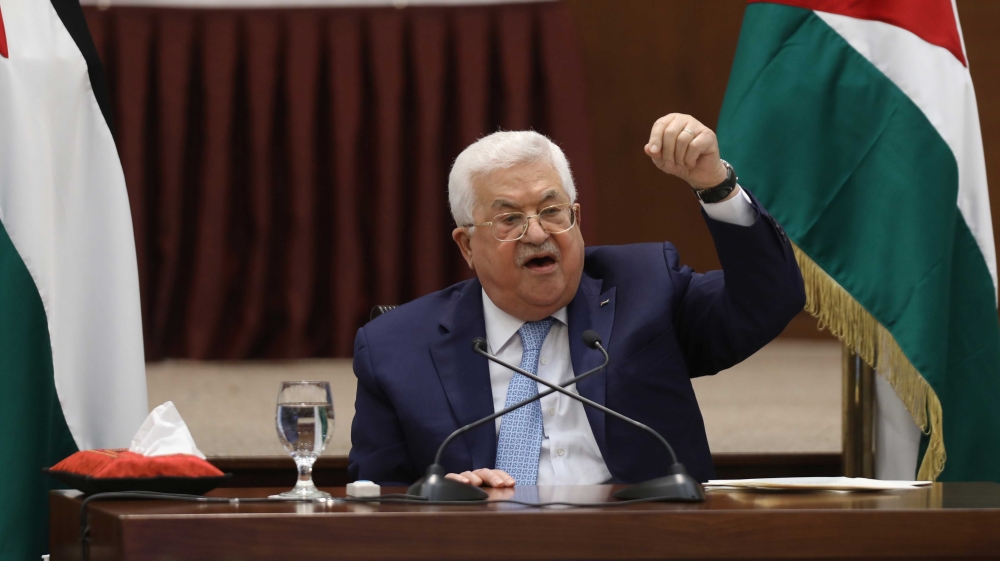
“This has put Abbas in a really tight corner, where he’s got very little room to manoeuvre,” Buttu said, adding it has only compounded the “fierce debates” that have been going on within the PA leadership circles about its future.
|
|
“These are questions that need to be had right now because all of the manoeuvring that they have done over the course of the past two and half decades has completely failed,” she explained.
Yet for Netanyahu and Trump, the agreement could not have arrived at a better time.
“It was very clearly timed to boost the political fortunes of both Trump and Netanyahu, who may also be facing an election soon and now has an excuse for not yet implementing annexation,” Mouin Rabbani said.
Buttu agreed.
“Netanyahu’s political career has been on life support before this announcement,” she said. “He can now boast – as he already did – that he is one of three Israeli leaders who has brokered agreements with the Arab world.
“And that – for a [occupying] country that has been desperately wanting recognition as being ‘normal’ – is fairly a big deal.”