
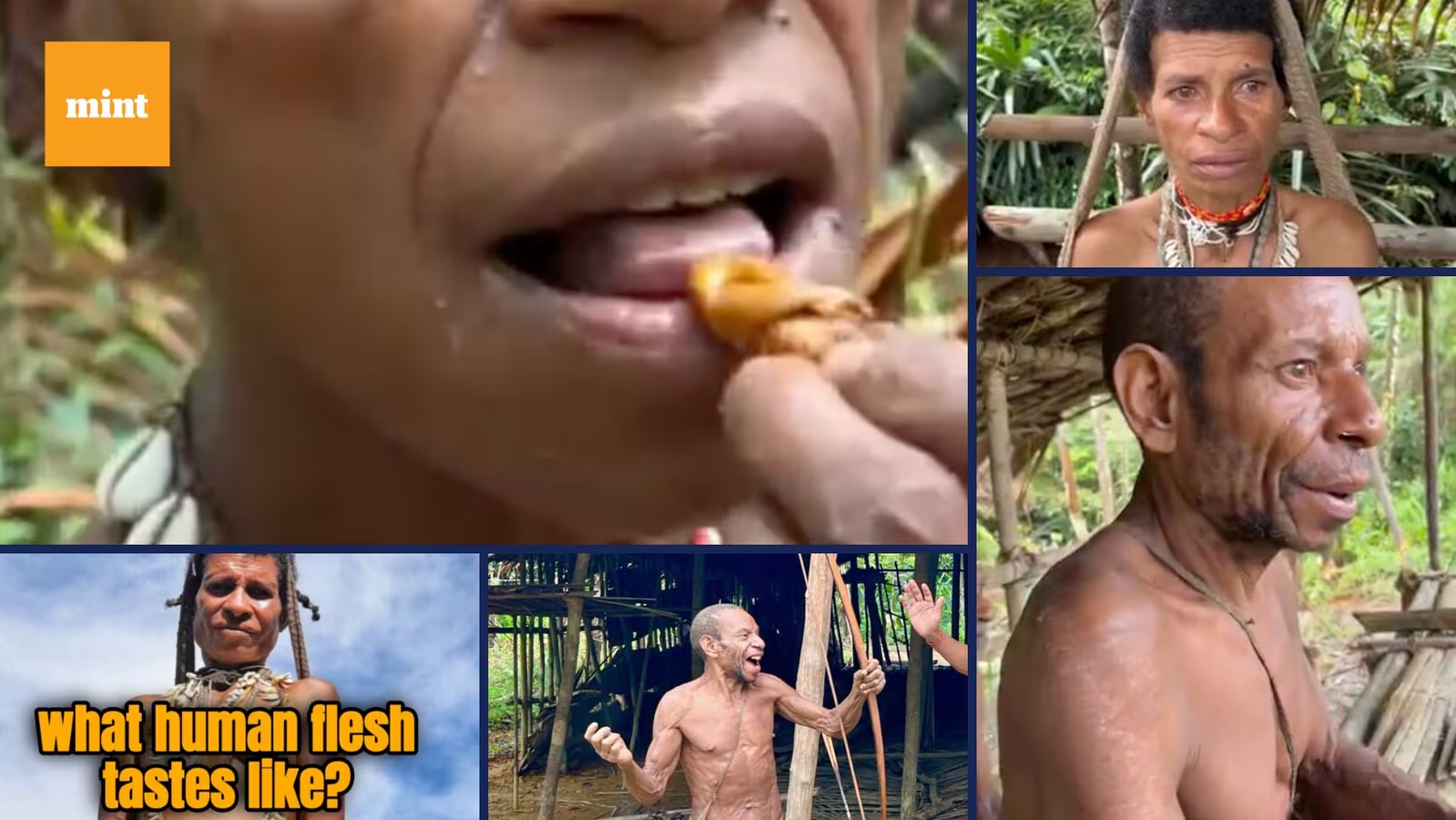
Cannibalism is the act of consuming the flesh or internal organs of another individual of the same species. In humans, it is the practice of eating human flesh or organs. The term “cannibal” refers to a person who practices this behavior.
-
-
In animals:
Cannibalism is a common ecological interaction and has been documented in over 1,500 species.
-
In humans:
Human cannibalism has been recorded in ancient and modern times, with documented instances in various regions and cultures.
-
-
Historical and cultural context:
While not widespread, cannibalism has been practiced in some cultures, often in response to famine or as part of ritualistic or violent practices.
-
Examples:
- The Island Caribs of the Lesser Antilles were known for their cannibalistic practices, with their name becoming the origin of the word “cannibal”.
-
- During famines, particularly in China, cannibalism was sometimes practiced as a survival measure.
-
- Japanese soldiers during World War II were documented to have engaged in cannibalistic acts on enemy soldiers and Allied prisoners of war.
-
- There are also documented instances of cannibalism in various African communities, often linked to famine or cultural practices.
-

27 Nigerian Tribesmen Accused Of Joining in Cannibalistic Rite
By Homer Bigartspecial To the New York Times.
Jan. 30, 1960
27 Nigerian Tribesmen Accused Of Joining in Cannibalistic Rite
Credit…The New York Times Archives
This is a digitized version of an article from The Times’s print archive, before the start of online publication in 1996. To preserve these articles as they originally appeared, The Times does not alter, edit or update them.
Occasionally the digitization process introduces transcription errors or other problems; we are continuing to work to improve these archived versions.
ABAKALIKI, Nigeria, Jan. 29 — Cannibalism, which had been believed extinct in Nigeria, had a brief surreptitious revival in late December. Twenty-seven men, including a Juju priest, are in prison on charges of having killed three men in an intertribal dispute over land. The police say the flesh of two victims was eaten by their assailants. East of the River Niger among the Wawa, or bush people, the term for human flesh is long pig. Anyone who knowingly partakes of long pig is liable to life imprisonment. A clash occurred Dec. 25 near the Cross River, below Obubra. It involved two clans of the illiterate, pagan Izi (pronounced easy) tribe who had long disputed title to farmland lying between their respective settlements.
Policemen Find Bodies
The police, who found the bodies of two of the men Dec. 30, obtained statements that cannibals had mutilated the bodies. Not a word of this has appeared in Lagos newspapers. With national independence only eight months away, the Federal Government is understandably sensitive to what it calls “destructive” reporting.
Cannibalism, commonplace in these parts a century ago, rarely happens today. Today’s occasional cannibalism is performed as part of a Juju ritual. One who eats the heart or some other part of his enemy is said to acquire strength and courage.
The men imprisoned at Obubra awaiting preliminary trial are members of the Nkpani clan, who live in the mud-hut settlement of Nkpani, near the Calabar frontier. The victims were Nko clansmen, whose village, also called Nko, was five miles north.
Last year, the Federal Supreme Court decided the land dispute in favor of the Nko. In early December the Nkpani sent a delegation to Nko with gifts of meat and palm wine. The delegation pleaded with the Nko people to be allowed to farm some of the disputed land. The Nko said no.
Nkpani Vote War
The Nkpani peace mission went home humiliated. On Dec. 24 the Nkpani men voted war on the Nko. A special clearing was prepared in the forest, where clansmen picked to slay the Nko people would live in isolation. A Juju priest named Kno Bassey erected a small hut in the clearing and initiated the warriors. On the morning of Dec. 25, Tom Isong of Nko began working on the disputed land with a fellow clansman. Suddenly five men emerged from the forest, shot Tom and dragged him away. His body has not been found.
His companion escaped. Later five Nko people gathering wood were ambushed by Nkpani warriors. Two were shot and dragged off. Subsequently the police found the dismembered torso of Enang Mbam and the body of Ekat Akpama. The heart had been removed from each body.