

2050: Algorithms to Robots — Emperor Mark Zuckerberg, Digital Kingdoms, and the Day Deletion Became Death
In 2026, being banned from Facebook feels inconvenient.
In 2050, it may feel like execution.
This is not science fiction.
It is trajectory.
What begins as content moderation evolves into behavioral governance.
What begins as community guidelines matures into digital law.
What begins as algorithmic filtering transforms into automated enforcement.
And somewhere between “Terms of Service” and “National Security Partnership,” a corporation becomes a kingdom.
From Social Network to Sovereign Power
In the early 2000s, Facebook was a college directory.
By the 2010s, it became a global town square.
By the 2020s, it became:
-
A news distributor
-
A political amplifier
-
A digital ID layer
-
A marketplace
-
A payment processor
-
A biometric data collector
-
A virtual reality architect
When a single platform mediates communication, commerce, identity, and reality itself, it stops being a company.
It becomes infrastructure.
And infrastructure becomes power.
The Rise of Algorithmic Rule

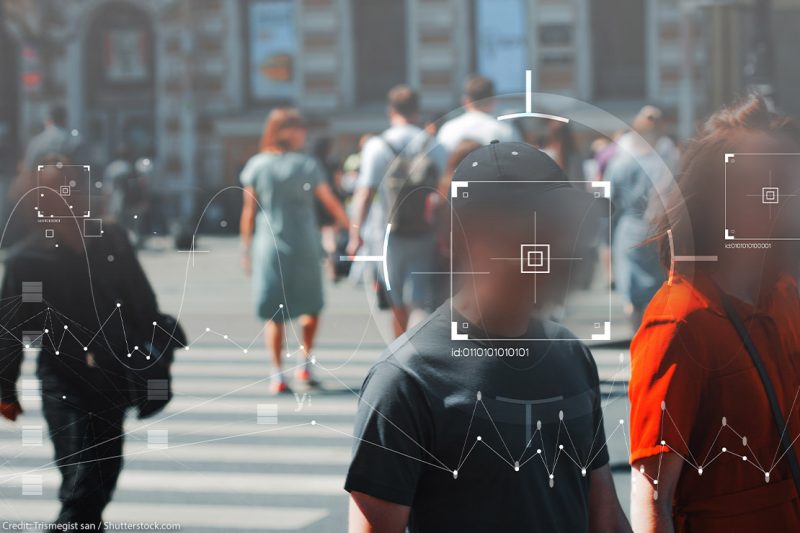
In 2050, imagine this:
You do not log into Facebook.
You live inside it.
Your identity is tied to:
-
Digital wallet
-
Social reputation score
-
Verified biometric ID
-
Work credentials
-
Access to augmented reality layers
The platform moderates speech using AI that understands tone, history, and network associations. It predicts “risk behavior” before you commit it.
You are not judged by what you did.
You are judged by what you might do.
And if the system flags you?
Access denied.
“Deletion” in 2050
Today, being banned means:
-
You lose your profile
-
You lose your followers
-
You lose your groups
In 2050, deletion could mean:
-
Your digital ID is frozen
-
Your payment systems are locked
-
Your work contracts are suspended
-
Your access to public AR layers disappears
-
Your transport privileges are revoked
Imagine walking into a train station and the gate does not open.
Not because you broke a law.
But because your digital behavior violated “Community Stability Guidelines.”
You are socially invisible.
Financially disabled.
Civically suspended.
In a world where everything is mediated digitally, deletion becomes a form of civil death.
From Algorithms to Robot Storm Troopers
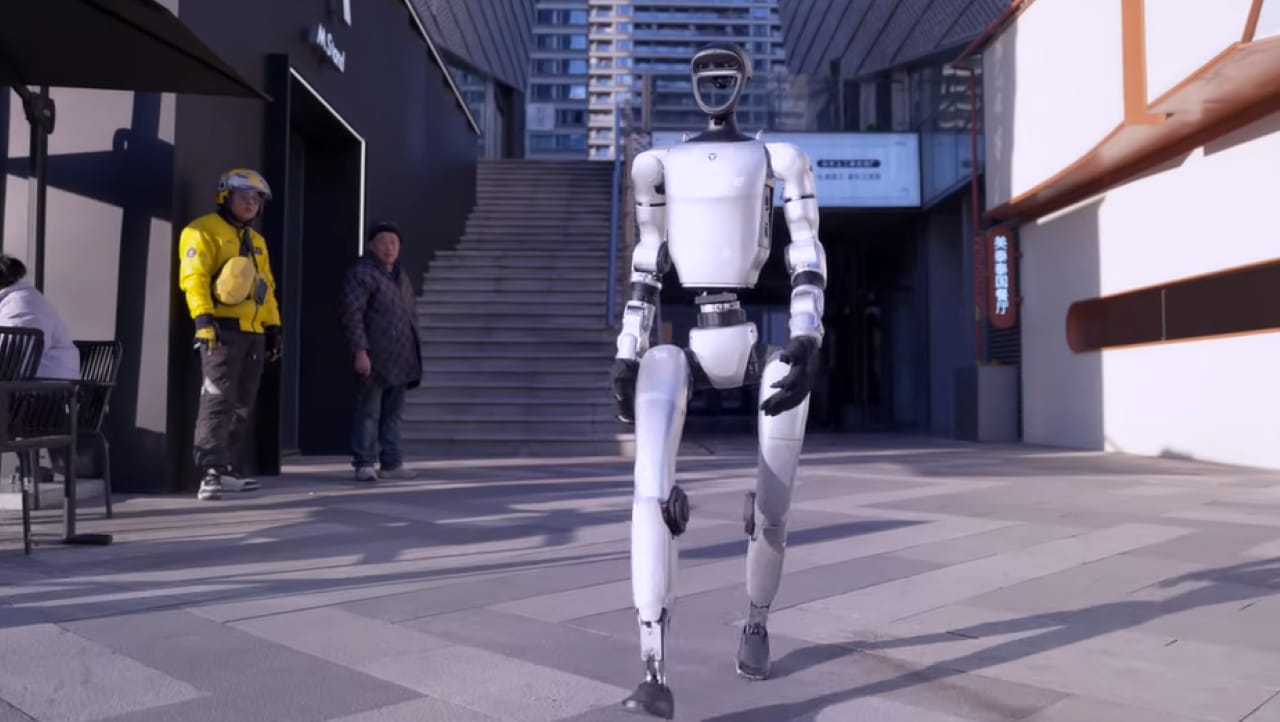
Governments already experiment with robotic policing.
Corporations already experiment with autonomous security.
By 2050, what stops a digital giant from operating physical enforcement?
Not necessarily through armies — but through partnerships.
Picture this:
-
AI flags high-risk accounts.
-
Automated reports feed into government databases.
-
Robotic patrol units receive behavioral heatmaps.
-
Enforcement becomes predictive.
No shouting officer.
No human discretion.
No empathy.
Just data.
In this scenario, the digital emperor does not need local offices.
He does not need social workers.
The empire runs on servers, satellites, and code.
Millions of robotic enforcers.
Billions of monitored users.
Judge.
Jury.
Executioner.
All algorithmic.
How Did We Get Here?
Not through war.
Through convenience.
We surrendered:
-
Privacy for connection.
-
Data for personalization.
-
Autonomy for efficiency.
-
Independence for visibility.
Every “Accept All Cookies” was a vote.
Every biometric login was a brick.
Every VR headset was a doorway.
We built digital kingdoms willingly.
And we crowned our emperors with engagement.
Facebook Jail Becomes Real Jail
Today, “Facebook Jail” is a meme.
You post something controversial.
You get suspended for 30 days.
In 2050?
Content violations could trigger:
-
Automated financial scrutiny
-
AI-driven risk classification
-
Travel restrictions
-
Employment limitations
-
Social ranking penalties
If platforms integrate with government digital identity systems, a violation of platform rules may blur into violation of civic order.
When corporate policy merges with public infrastructure, dissent can be reclassified as instability.
And instability can be criminalized.
Why the World Is Oblivious
Because it is gradual.
Because it is profitable.
Because it feels optional.
People assume:
“It’s just a social network.”
But it is no longer just social.
It is economic.
It is political.
It is psychological.
It shapes elections.
It influences markets.
It directs attention.
It molds culture.
Most importantly — it defines reality.
When the majority of human interaction passes through private servers, those servers become the new public square.
But unlike historical public squares, these are owned.
Privately.
Governed privately.
Enforced privately.
The Emperor Problem
This is not about one man.
Not truly.
Not Mark Zuckerberg.
Not any single CEO.
It is about structural power.
When a tech giant holds:
-
Identity
-
Communication
-
Commerce
-
AI intelligence
-
Robotics partnerships
-
Virtual world infrastructure
It begins to resemble a sovereign entity.
A kingdom without borders.
A nation without voters.
A ruler without election.
And unlike historical emperors, this one governs billions simultaneously.
Silently.
Through code updates.
What Could Be — Or Will Be?
There are three paths to 2050:
1. Digital Feudalism
Citizens tied to platforms.
Reputation scores determine life opportunities.
Corporate governance merges with state enforcement.
2. Regulated Digital Democracy
Governments impose transparency.
Algorithms are audited.
Digital rights are constitutionalized.
Data ownership returns to individuals.
3. Decentralized Renaissance
People abandon centralized empires.
Blockchain identities replace platform IDs.
Communities rebuild open networks.
The future depends on awareness.
And awareness is currently low.
The Illusion of Safety
Many assume:
“If I follow the rules, I’m safe.”
But rules evolve.
Policies update.
Definitions shift.
And algorithms learn patterns that humans never intended.
The danger is not tyranny overnight.
The danger is silent normalization.
Where:
-
Surveillance becomes standard.
-
Automation replaces empathy.
-
Digital compliance replaces citizenship.
The Final Question
In 2050, when the world is layered with augmented reality, AI governance, robotic enforcement, and biometric identity systems, who truly holds power?
Elected governments?
Or platform architects?
If your digital identity becomes your legal identity…
If your account status becomes your civic status…
If your deletion becomes your exclusion from society…
Then we must ask:
Are we users?
Or subjects?
Before It Becomes Real
The time to debate digital rights is now.
The time to demand:
-
Algorithmic transparency
-
Data portability
-
Due process in digital bans
-
Separation of corporate platforms and state enforcement
… is before 2050.