
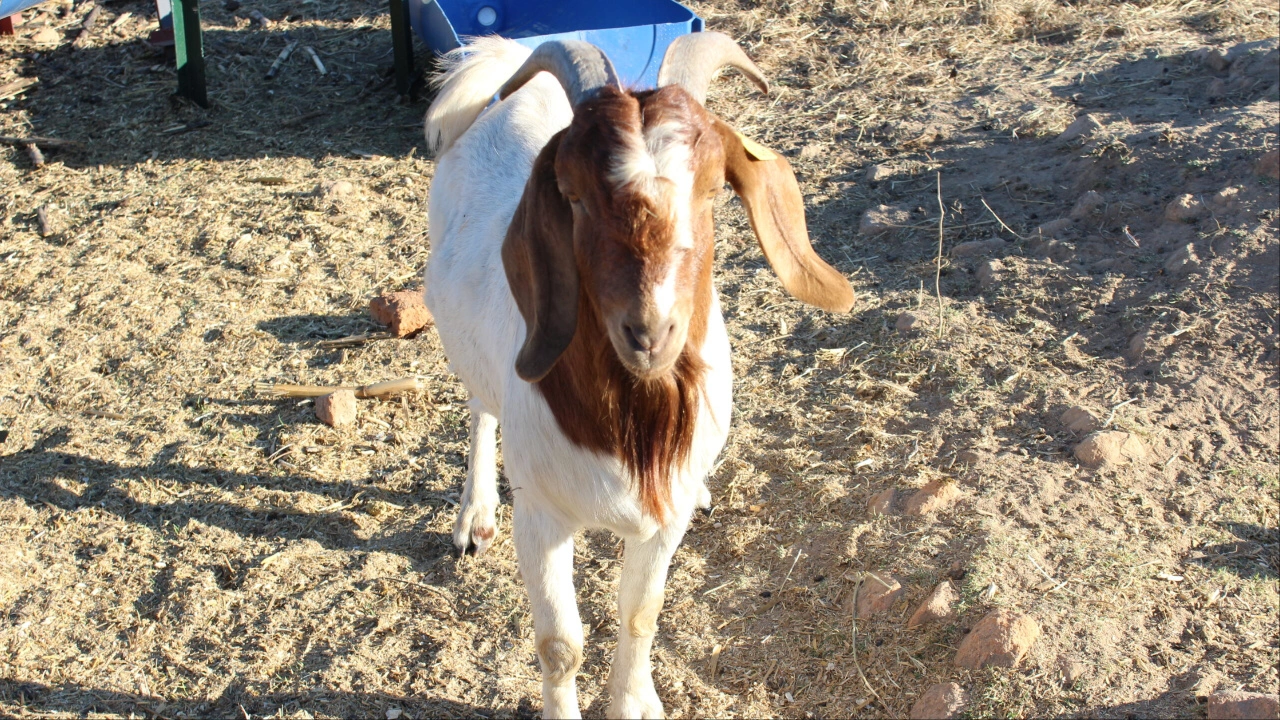
The Real-Life Spider-Men: Why Mountain Goats are the Ultimate G.O.A.T.s
If Peter Parker ever needed climbing lessons, he wouldn’t look to spiders—he’d look to the mountain goat. These animals straight-up laugh in the face of physics, scaling near-vertical cliff faces like they have magnets in their feet.
Here is what makes them the undisputed G.O.A.T. of mountain climbing:
-
Built-In Climbing Shoes: Their hooves have a hard outer shell for digging into tiny rock ledges, paired with a soft, rubbery internal pad that acts like a high-traction suction cup.
-
Insane Balance: A mountain goat’s shoulders and front legs are incredibly muscular, allowing them to pull their entire body weight up vertical rock walls with ease.
-
Fearlessness: They routinely hang out on cliffs thousands of feet in the air just to lick mineral salt off the rocks or escape predators who wouldn’t dare follow them.
They don’t need webs—their biology is the ultimate superpower.
Biblical Goats
Yes, goats actually pop up all over the place in the Bible! They were incredibly important in the ancient Near East for daily survival, wealth, and religious rituals.
Here are a few of the most famous moments where goats take the spotlight:
1. The Original “Scapegoat” (Leviticus 16)
This is where the modern term “scapegoat” comes from. During the Day of Atonement (Yom Kippur), the high priest would select two goats. One was sacrificed, but the priest would symbolically place all the sins of the community onto the second goat—the scapegoat—and release it alive into the wilderness, carrying the people’s wrongdoings away.
2. Separating the Sheep from the Goats (Matthew 25)
In the New Testament, Jesus uses goats in a famous parable about the final judgment. He explains that the nations will be separated “as a shepherd separates the sheep from the goats.” In this metaphor, the sheep represent the compassionate people who helped those in need, while the goats represent those who were indifferent.
3. Jacob’s Spotted Flocks (Genesis 30)
Goats were essentially currency in ancient times. In a major Old Testament family drama, Jacob strikes a deal with his deceptive father-in-law, Laban, agreeing that his wages will consist only of the speckled, spotted, and black goats in the flock. Through some clever selective breeding, Jacob ends up outsmarting Laban and building a massive fortune.
4. Wilderness Survival Gear (Exodus 26)
When the Israelites were building the Tabernacle (their portable worship tent in the desert), they needed something durable to protect it. The outer layers of the tent’s roof were woven entirely from goat hair, which was excellent for shedding rainwater and enduring the harsh desert sun.
While mountain goats are the absolute undisputed kings of sheer, vertical rock faces, a few other animals give them a serious run for their money depending on the surface they are climbing.
Here are the top contenders that challenge the goat’s climbing crown:
1. The Alpine Ibex (The Gravity-Defyers)
While technically a close relative of the goat, the Alpine Ibex takes vertical climbing to a surreal level. They are famous for scaling the near-vertical brick wall of the Cingino Dam in Italy just to lick salt off the stones. They do this on a wall that is nearly straight up, balancing on ledges just inches wide.
2. Geckos (The Masters of Smooth Surfaces)
If we are talking about defying gravity on any surface, the gecko wins. While a goat needs at least a tiny microscopic ridge to grip, a gecko can walk upside down across a sheet of smooth glass. They do this using millions of microscopic hairs on their toes called setae, which create a molecular bond (Van der Waals forces) with the surface.
3. Gibbons (The Kings of the Canopy)
If the mountain goat rules the rocks, the gibbon rules the trees. These primates practice “brachiation”—swinging from branch to branch using only their arms. They can travel through the jungle canopy at speeds up to 35 mph (55 km/h) and make leaps of up to 50 feet between trees, essentially flying through the forest.
4. Snow Leopards (The Ultimate All-Terrain Predators)
The only animal that can successfully hunt a mountain goat on its own turf is the snow leopard. They have massive paws that act like natural snowshoes, long tails used for perfect balance mid-air, and powerful hind legs that allow them to leap up to 50 feet horizontally or 20 feet straight up a cliffside to catch prey.